Spatial Awareness Tools for Visually Impaired Gamers
ACM ASSETS 2022 (26.5%)
ACM UIST 2021 (21%)
2019 - 2021
User research
User testing
3D game design
Vishnu Nair
Brian Ma
Ricardo Gonzalez
Yicheng He
Mason Hayes
Hannah Huddleston
Matthew Donnelly
Brian Smith
Mainstream 3D video games are largely inaccessible to visually impaired players (VIPs) because they lack crucial accessibility tools. One way to provide greater accessibility is by providing players with a sense of spatial awareness of their surroundings.
I was a researcher contributing to user research and 3D game design for the Computer Enabled Abilities Lab at Columbia University under Professor Brian Smith.
"Spatial awareness," as used in our work, refers to a user's awareness of their surrounding environment and how they are situated within that environment. We performed our investigation with respect to 6 distinct aspects of spatial awareness that we identified through existing research in cognitive map formation and spatial awareness for people with vision impairments within the physical world:
The scale of an area.
The shape of an area.
The user's own position & orientation within an area.
The presence of items within the area.
The arrangement of items within the area.
Areas adjacent to the player's current area.
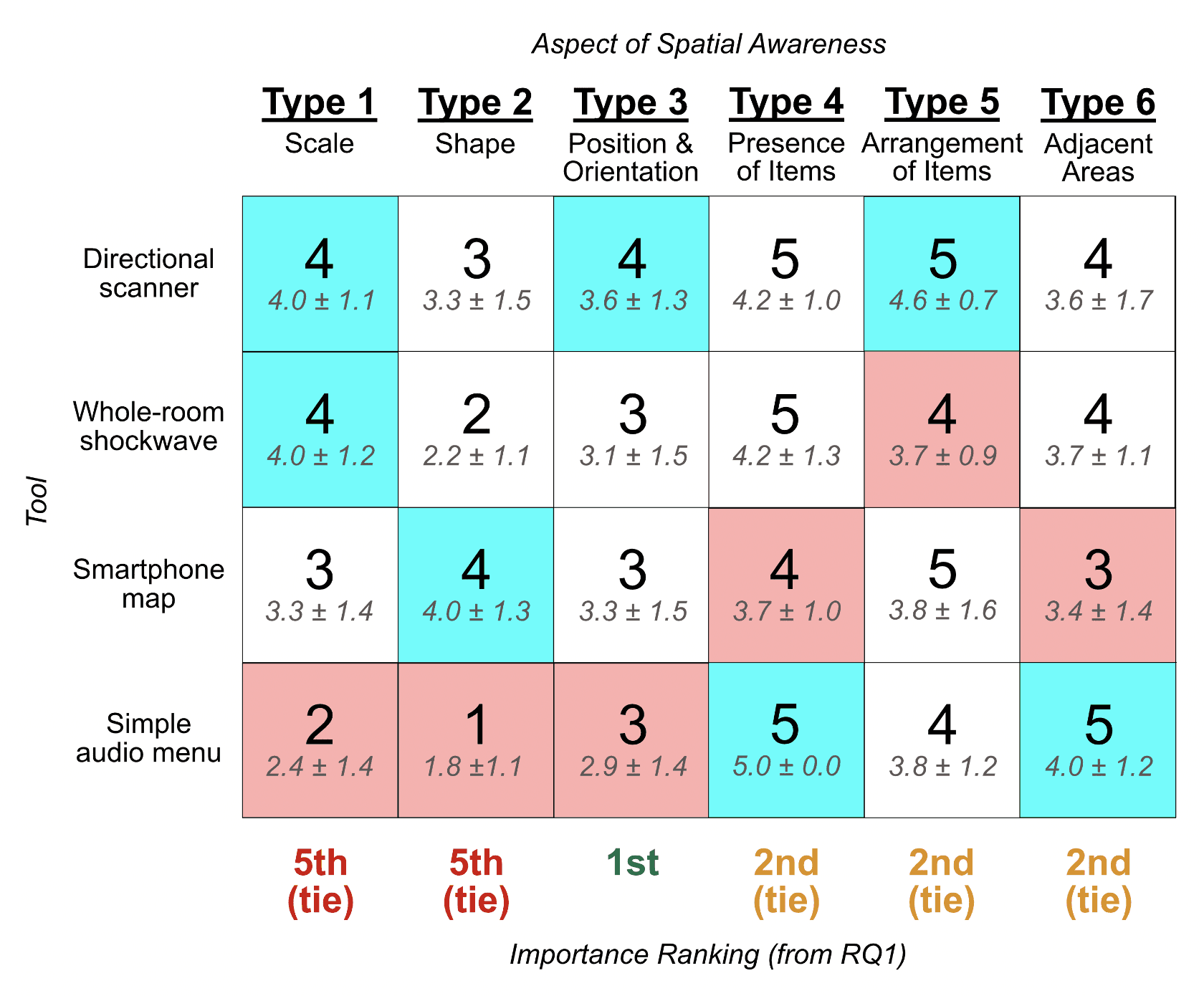
With our user study, we wanted to understand what aspects of spatial awareness VIPs find important and how well today's SAT approaches facilitate the various aspects of spatial awareness.
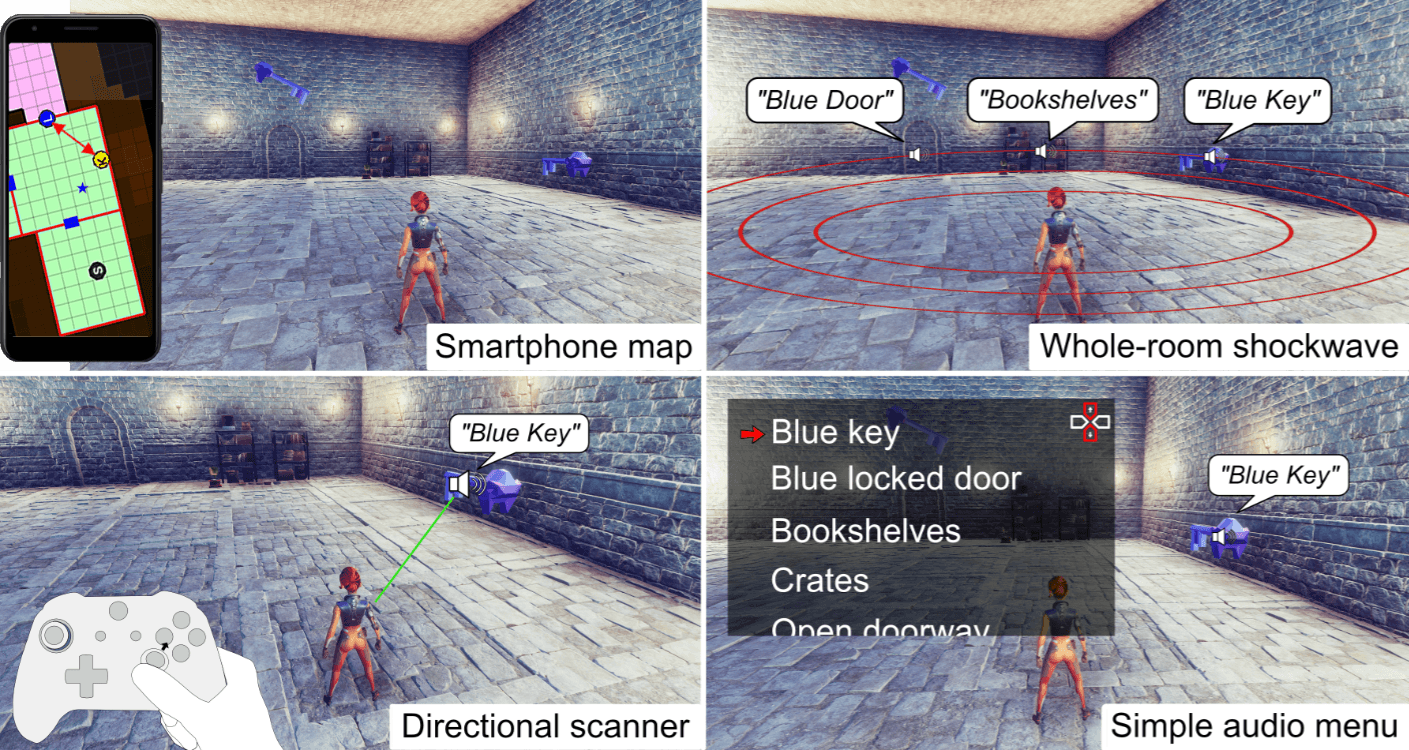
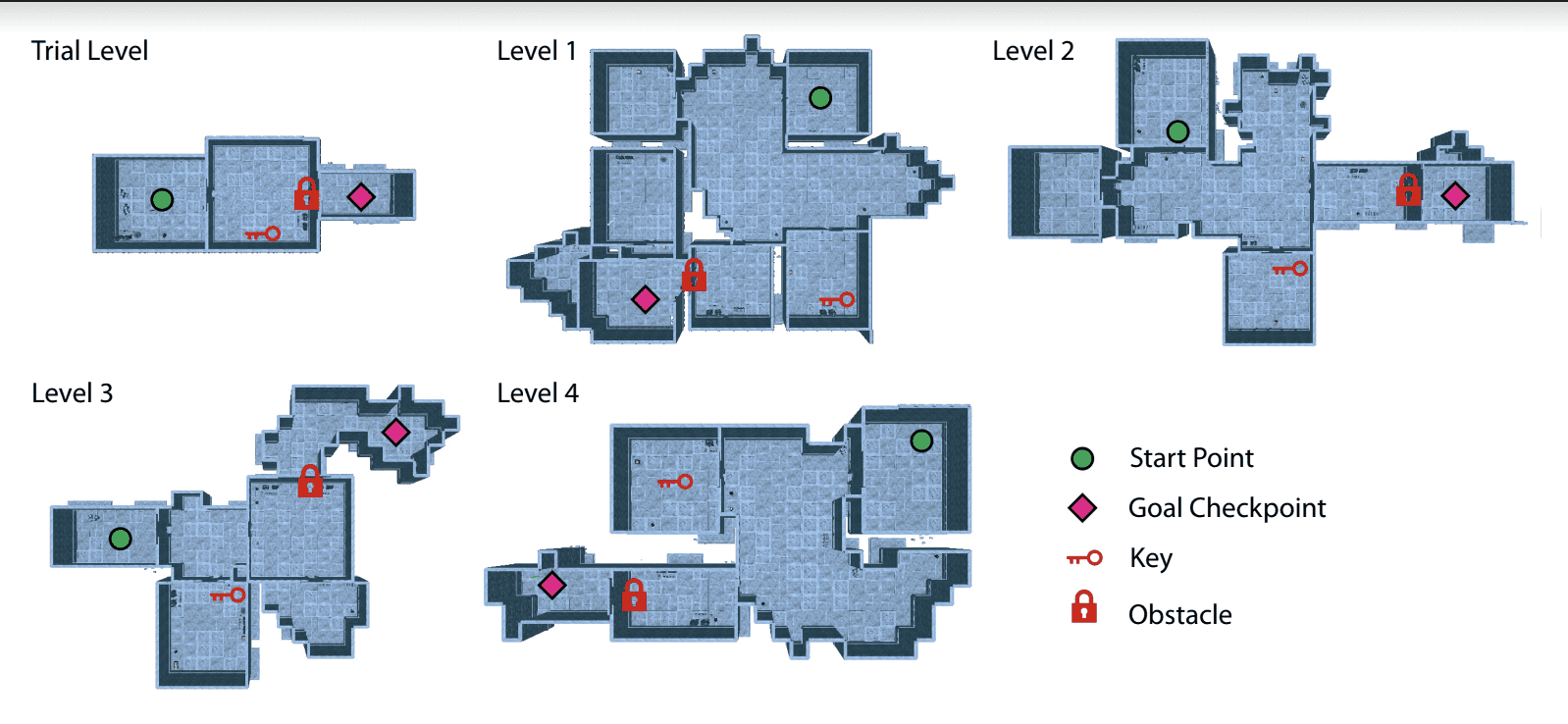
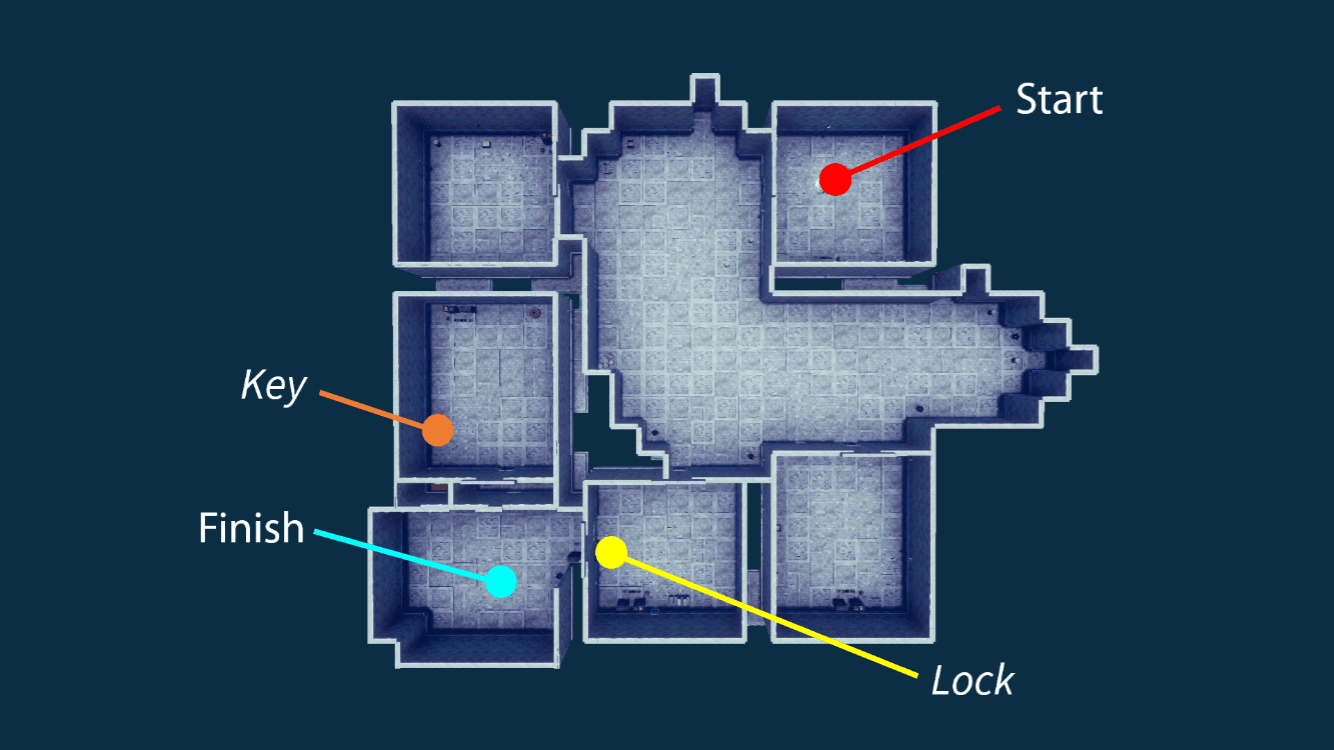
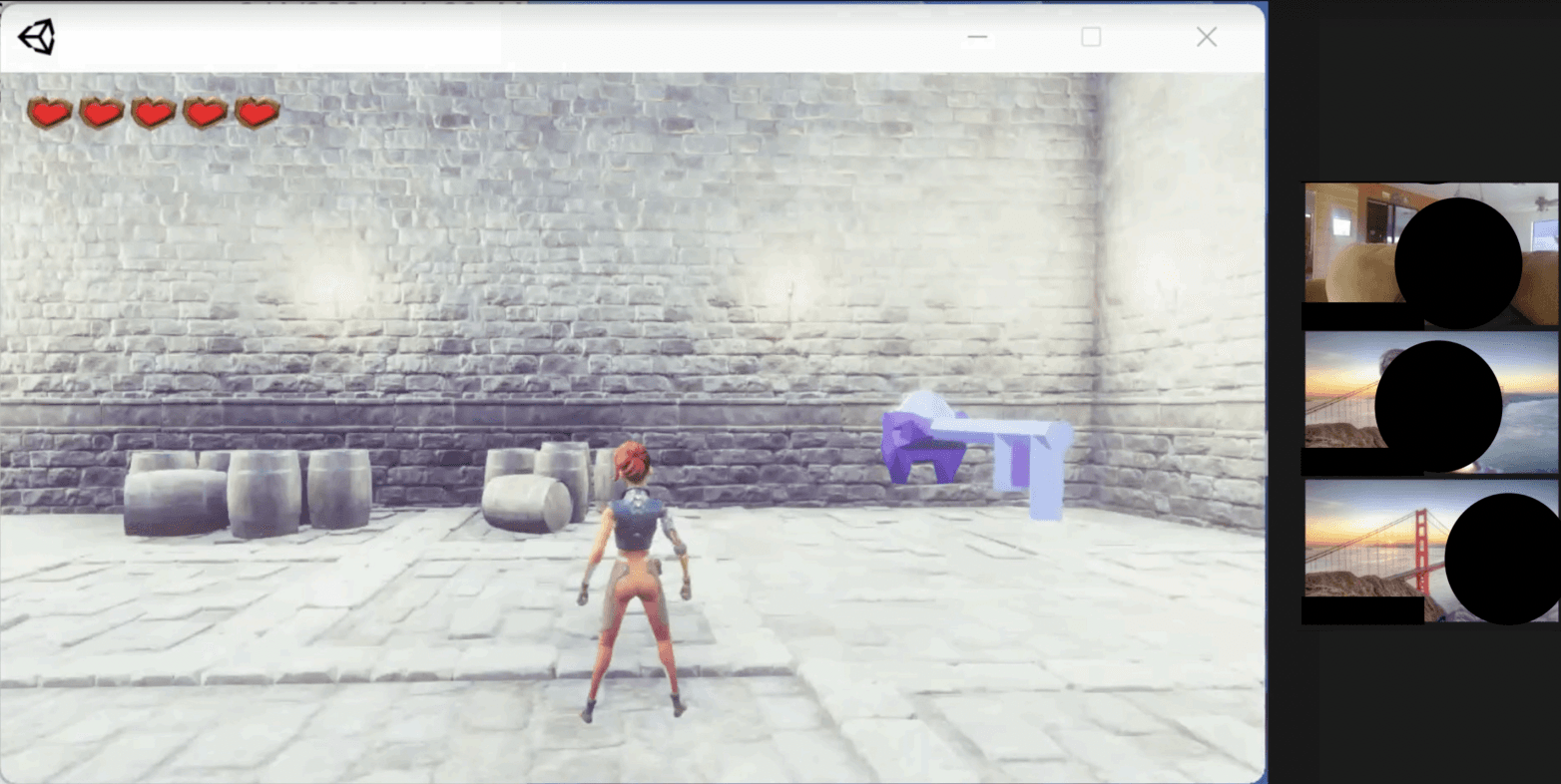
We investigated 4 approaches to giving VIPs spatial awareness of their surroundings, and built out these systems through a 3D third person adventure escape game and tested with 9 visually impaired participants:
Smartphone app
Directional scanner
Whole room shockwave
Simple audio menu
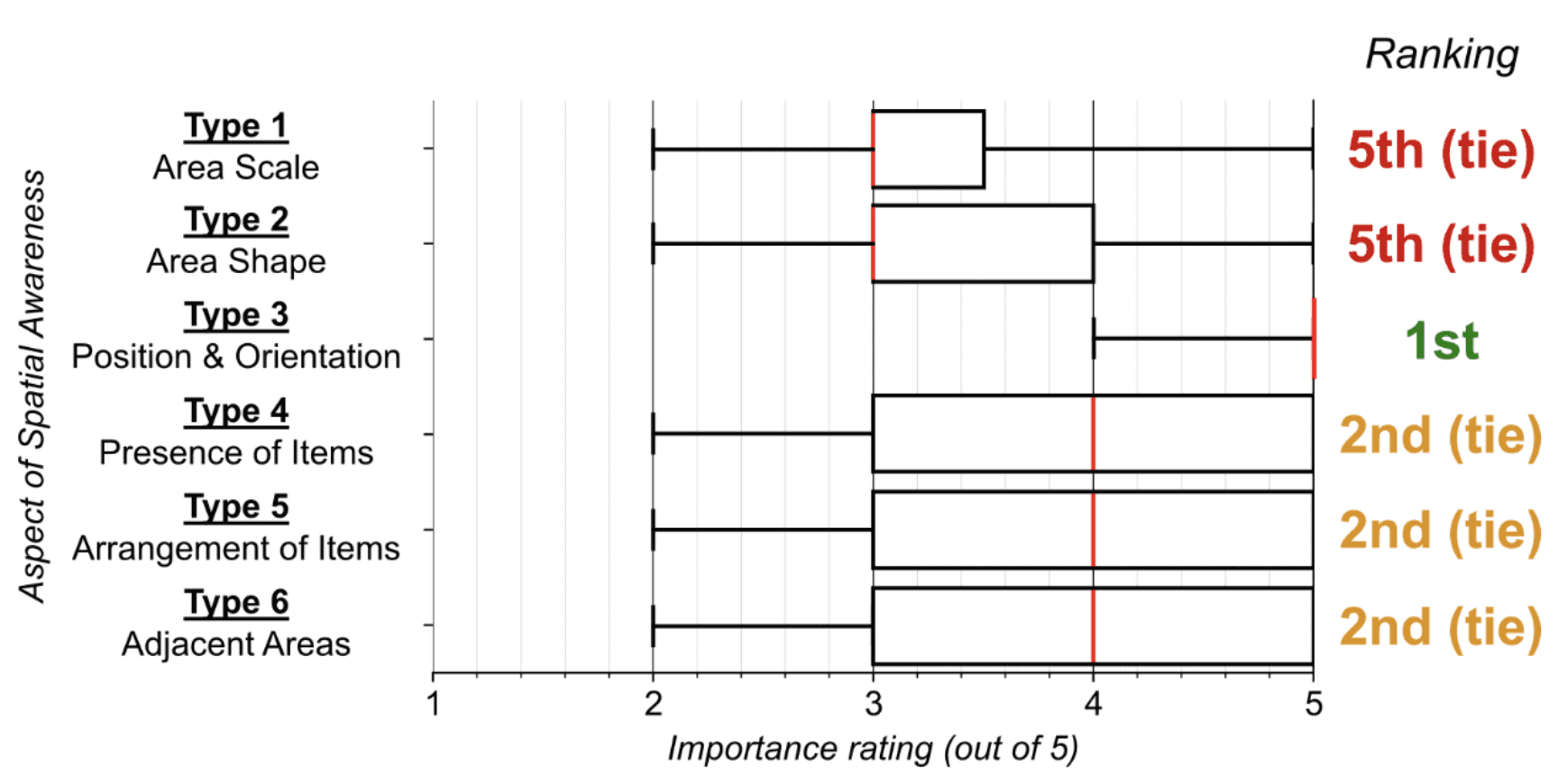
In terms of the relative importance of the 6 types of spatial awareness to VIPs:
Position & orientation: Was the most important in that it was always helpful in knowing their current situation within the area as part of planning future actions.
Item presence, item arrangement, and adjacent areas awareness: There was a 3-way tie between these types which participants thought could help, but could also be too much information at times.
Area scale and shape awareness: Finally, tied at the very bottom were these types, which participants thought were unnecessary much of the time.
Our findings reveal several implications: VIPs will benefit greatly from further work in creating an effective tool for communicating position & orientation, and SATs should embrace customizability as a core feature. Furthermore, our investigations with tool combinations yielded that the combination of the directional scanner and the simple audio menu together gives players the greatest spatial awareness — that is, these two tools together provide better spatial awareness than any one tool by itself.
Beyond video games, we also see similar studies within the physical world to evaluate navigation tools built for blind and low vision users within physical world environments.
With our findings, we hope that accessible game designers will have a better understanding as to how SATs can provide a fulfilling yet accessible experience for VIPs within their games and thus open them up to an audience who may otherwise have been unable to play those very games.