HOME

CREATIVE

Atlas SQL

OVERVIEW

To provide our secondary personas, analysts, first class access to their MongoDB Atlas data from their coveted SQL-based tools.

YEAR

2022 - 2023

ROLE

Product design
Stakeholder management
User testing

TEAM

1 Product manager
3 Engineers

Problem space

While MongoDB Atlas is a powerhouse for data storage and management, there is a growing need to target the data analytics space. In order to do so, we want to scale our existing tooling - Atlas SQL.

How might allow analytic users to frictionlessly activate, connect, and manage MongoDB data with external SQL tools?

Business goals

Increase investment into analytics users by simplifying the first touch experience for Atlas SQL. Grandfather out the static payment plan and introduce an improved and scale by usage one. Connect the UI with our user’s main programmatic interface experiences through further SQL schema management of downstream data.

Business goals

Increase investment into analytics users by simplifying the first touch experience for Atlas SQL. Grandfather out the static payment plan and introduce an improved and scale by usage one. Connect the UI with our user’s main programmatic interface experiences through further SQL schema management of downstream data.

Engineering needs

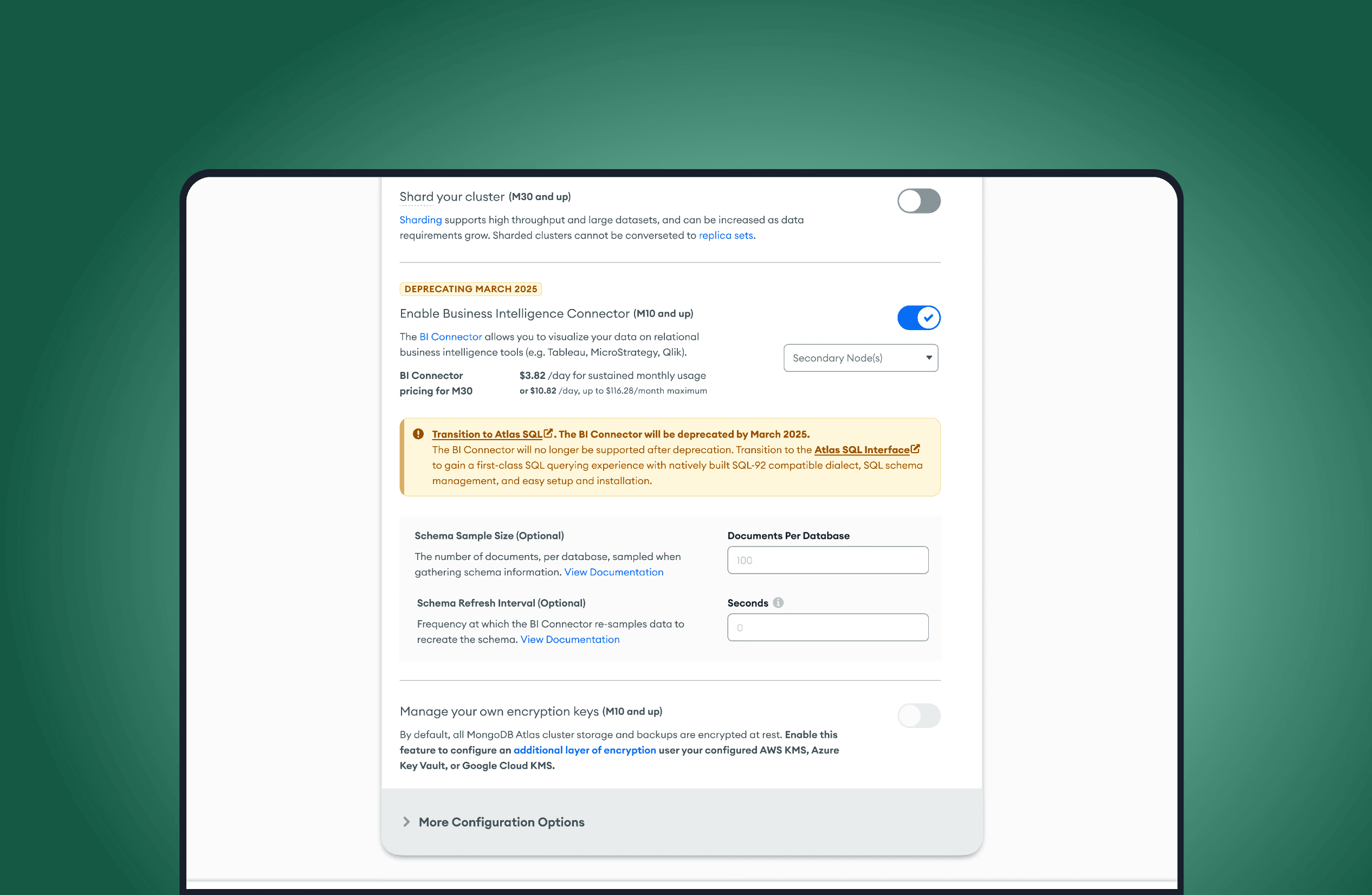
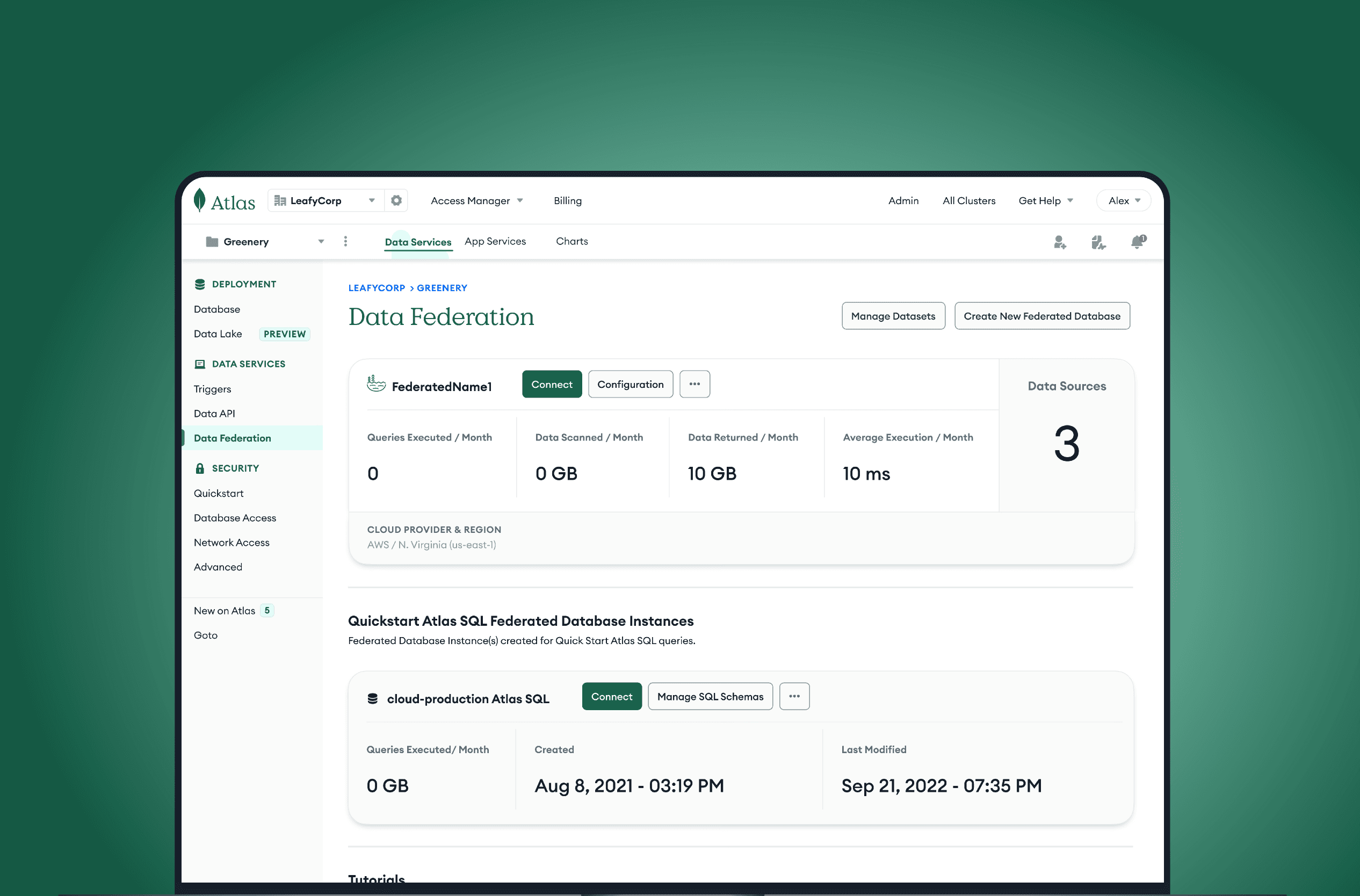
Decouple Atlas SQL from Data Federation manual set up to reduce needed engineering resources for large background data federation instances. Deprecate the legacy BI Connector tool to redirect engineering and support resources to a more scalable analytics tool.

Engineering needs

Decouple Atlas SQL from Data Federation manual set up to reduce needed engineering resources for large background data federation instances. Deprecate the legacy BI Connector tool to redirect engineering and support resources to a more scalable analytics tool.

Engineering needs

Decouple Atlas SQL from Data Federation manual set up to reduce needed engineering resources for large background data federation instances. Deprecate the legacy BI Connector tool to redirect engineering and support resources to a more scalable analytics tool.

Design goals

Make Atlas SQL easy to get started with and highly visible to our target analytic users. Transition legacy analytics users seamlessly to Atlas SQL to reduce downtime frustration. Reduce manual user creation by automating the Atlas SQL process. Provide more in house SQL schema customization for power analytics users.

Design goals

Make Atlas SQL easy to get started with and highly visible to our target analytic users. Transition legacy analytics users seamlessly to Atlas SQL to reduce downtime frustration. Reduce manual user creation by automating the Atlas SQL process. Provide more in house SQL schema customization for power analytics users.

Design goals

Make Atlas SQL easy to get started with and highly visible to our target analytic users. Transition legacy analytics users seamlessly to Atlas SQL to reduce downtime frustration. Reduce manual user creation by automating the Atlas SQL process. Provide more in house SQL schema customization for power analytics users.

Key design decisions

After validating multiple iterations of work with 11 quantitative user tests, these are the key solutions addressing the specified goals above.

Increased Atlas SQL awareness and adoption

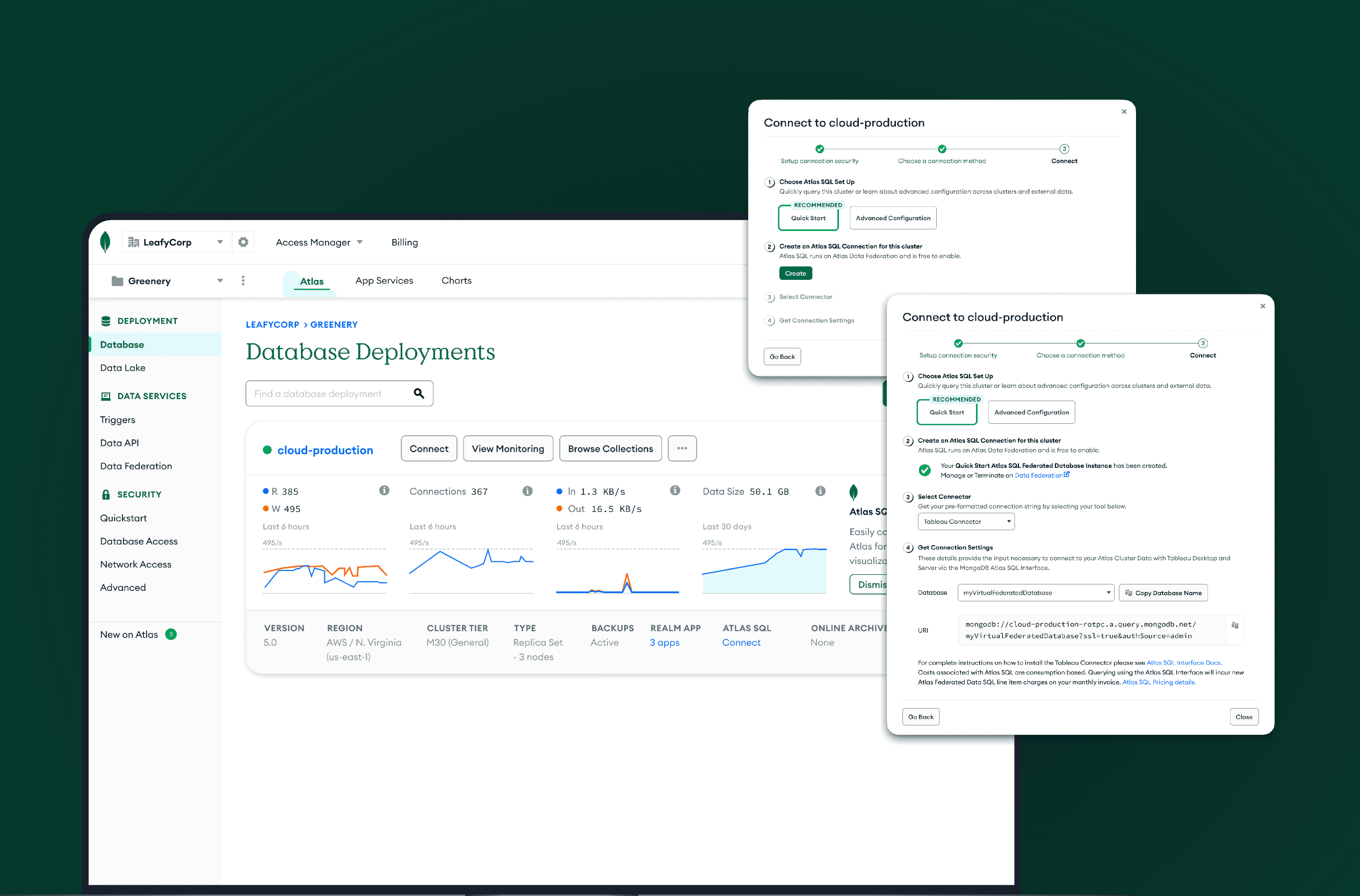
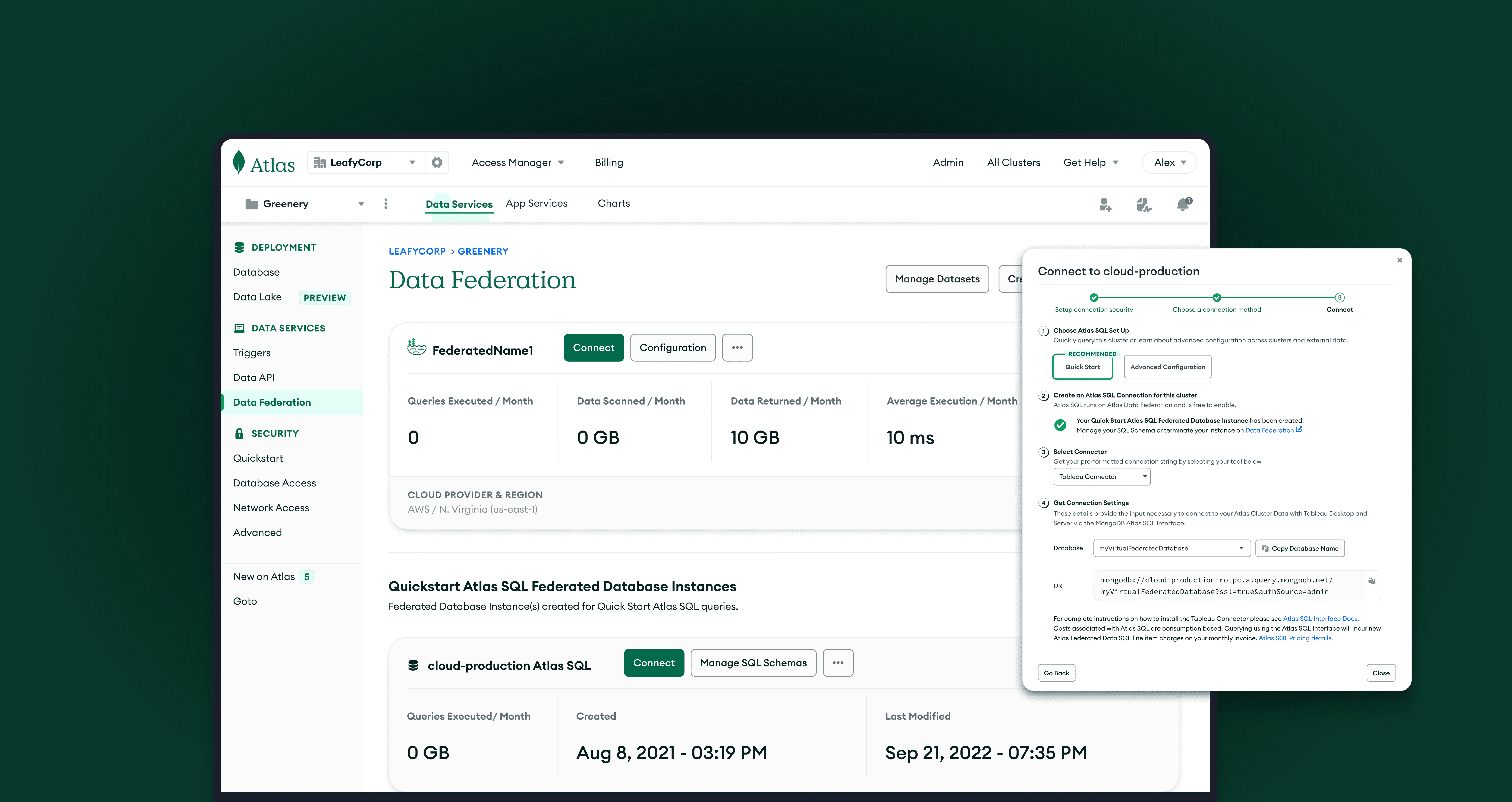
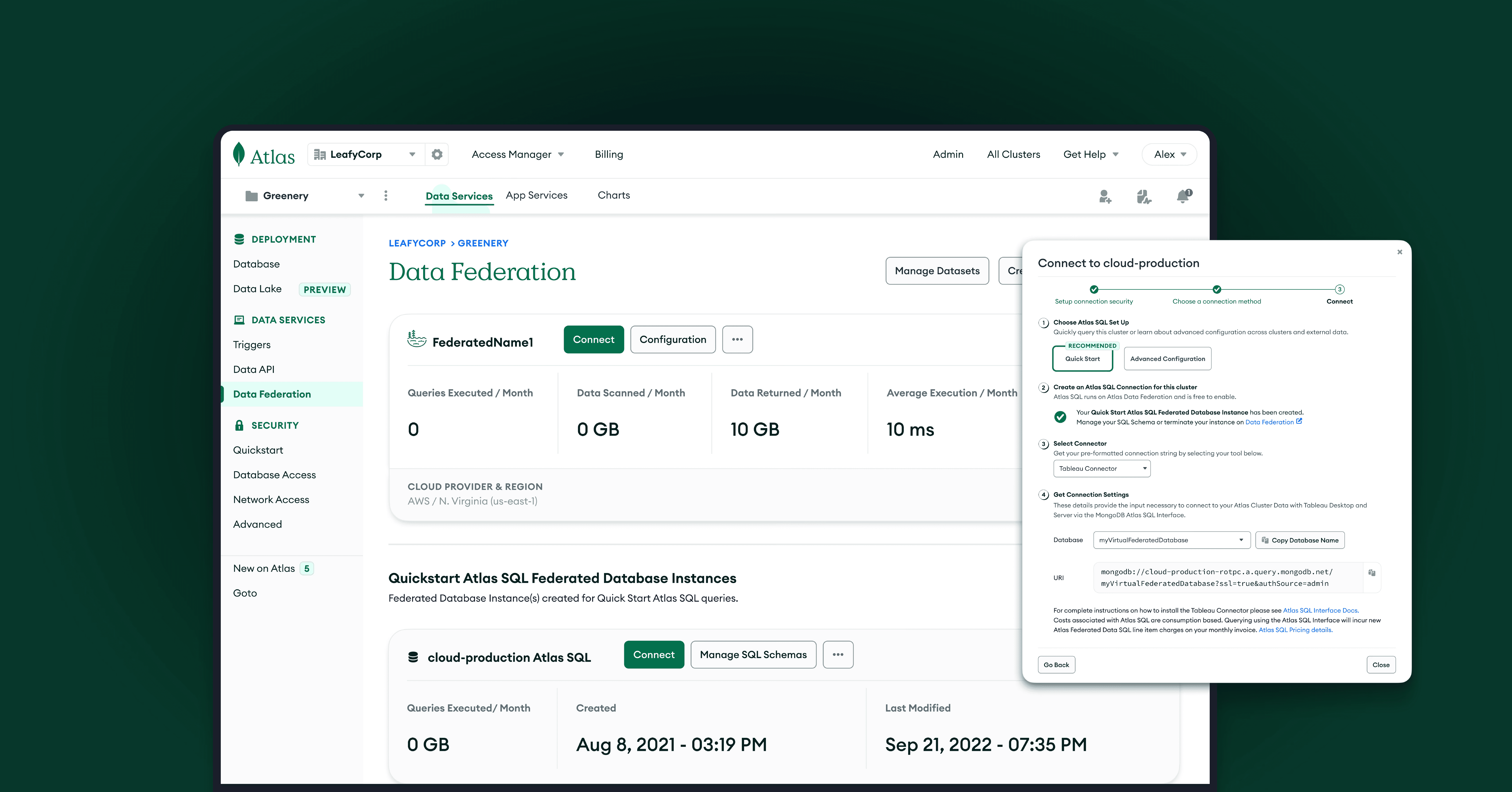
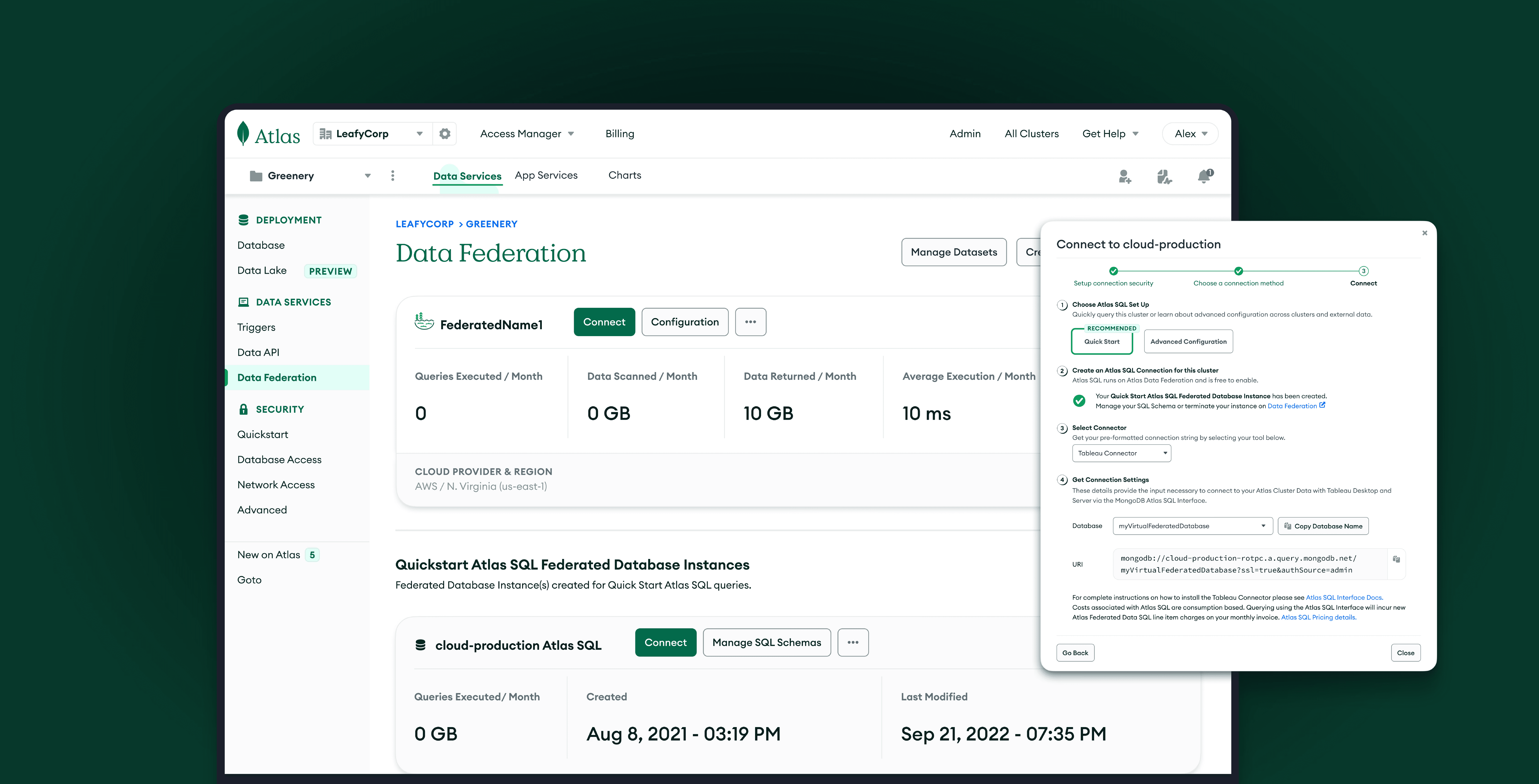
The biggest MVP requirement was to decrease the barrier to entry for Atlas SQL by bringing access to the home page, automating and abstracting backend infrastructure creation by decoupling manual Data Federation set up, and allowing for advanced configuration options for experienced users.

Transitioned legacy analytics user

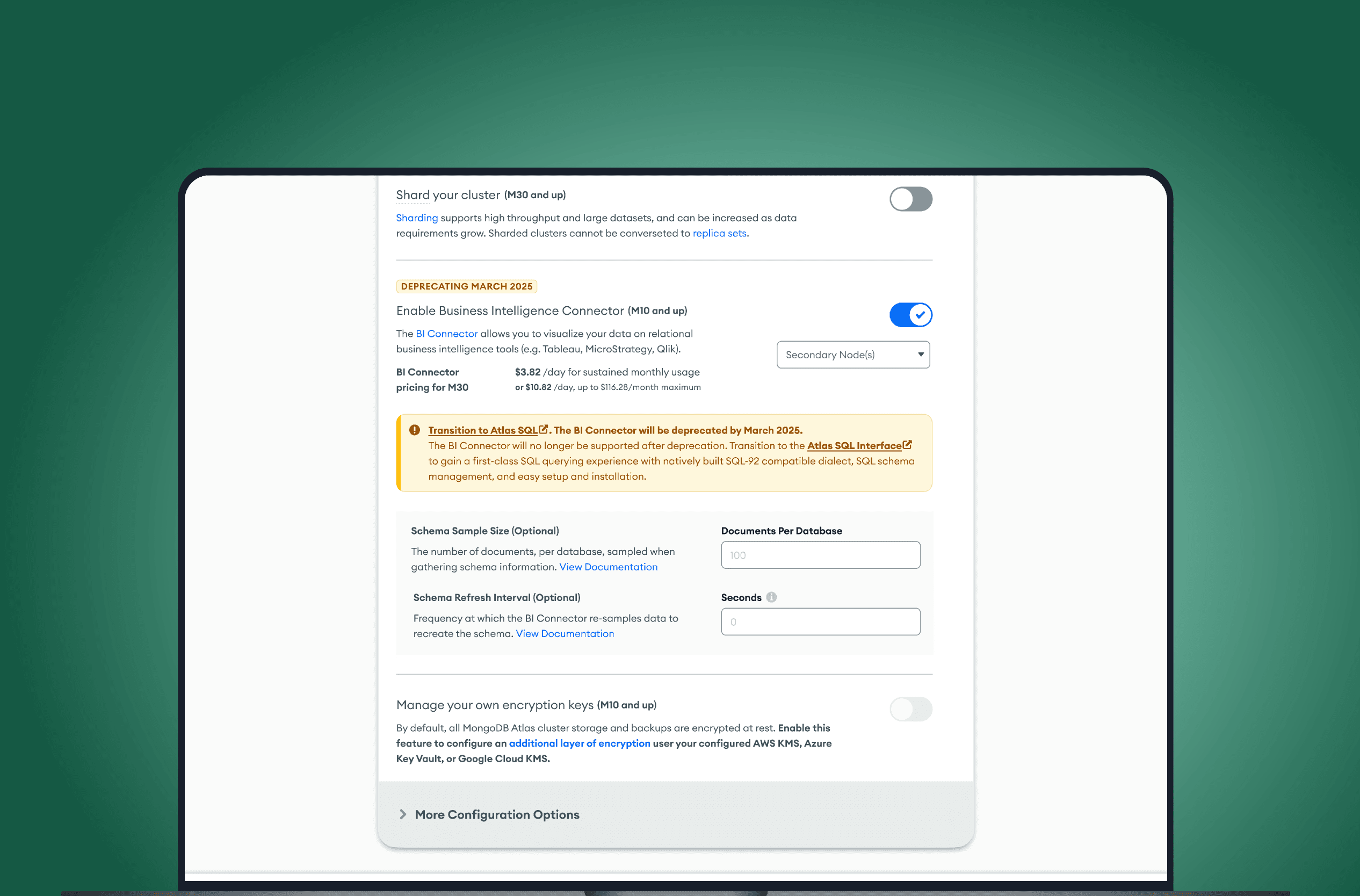
After developing a quick start way to activate Atlas SQL, our secondary concern was to direct our current BI Connector customers towards this new option. I worked closely with my PM to highlight redirection to Atlas SQL and to create a deprecation timeline and solution document for users.

Increased feature richness and customization

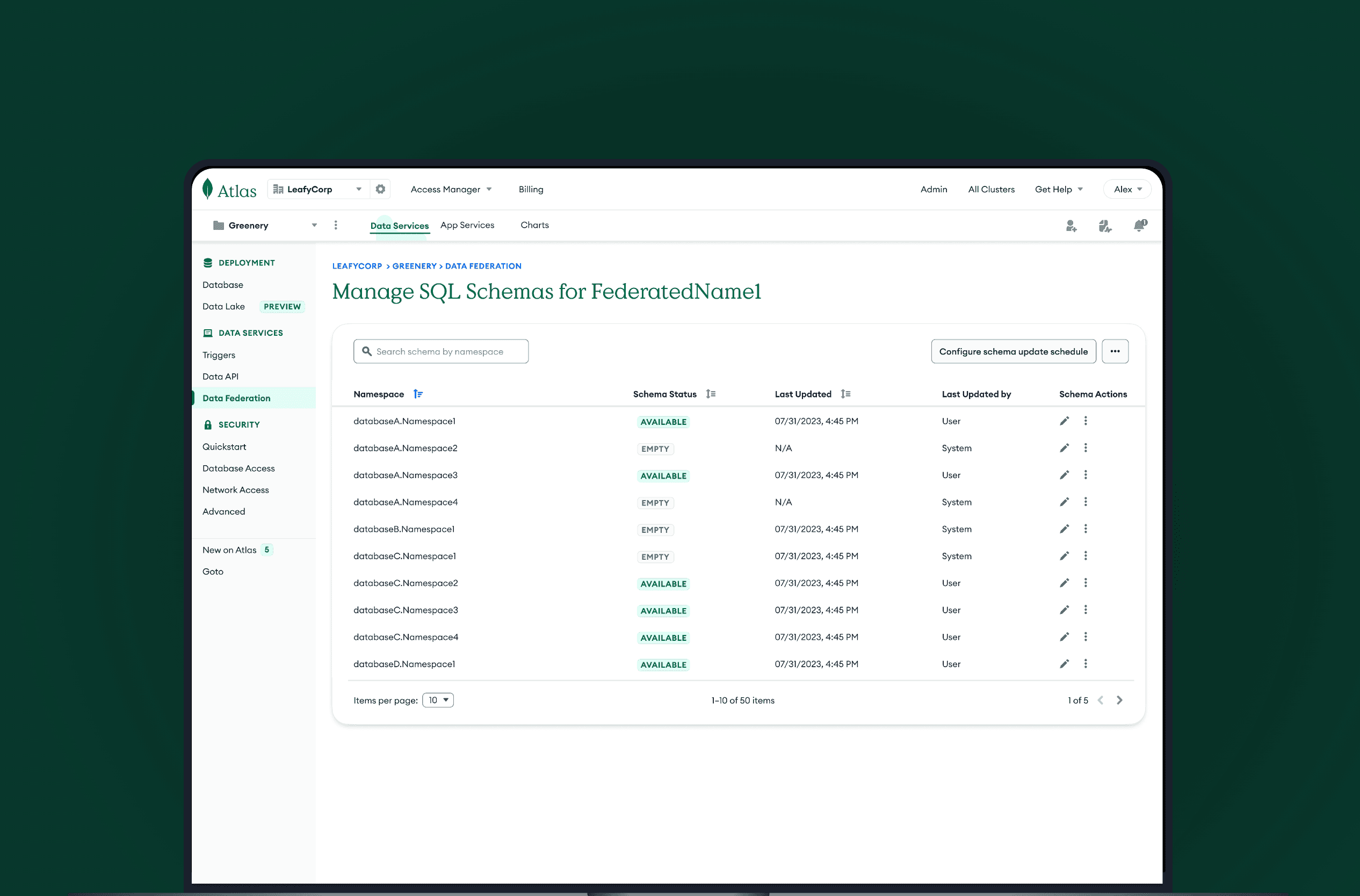
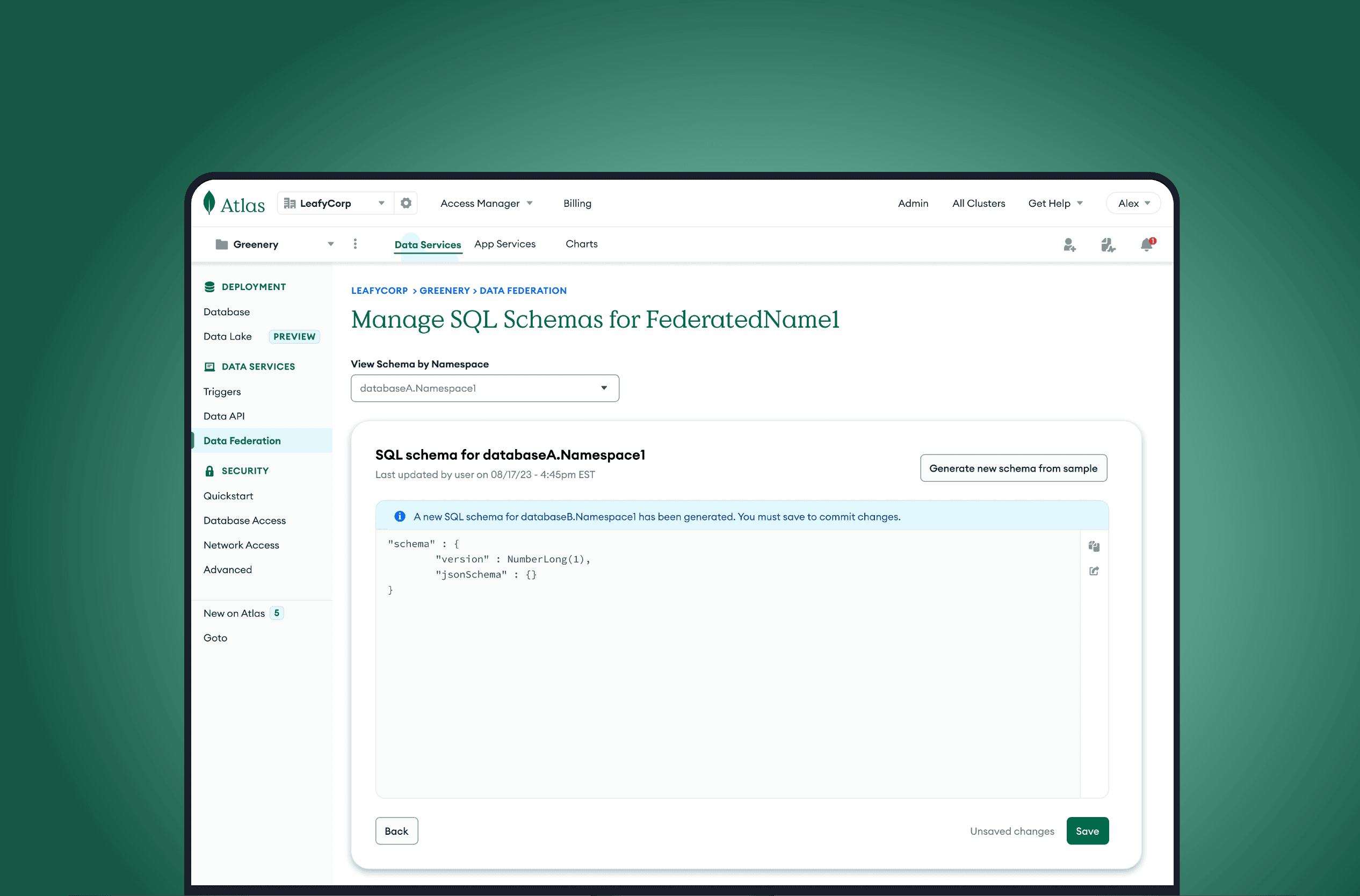
Finally, after the top two priorities were address and implemented, a third round of product improvement occurred. In this sprint, we targeted our power and Atlas platform users by adding Atlas SQL schema management capabilities within the UI to improve user retention.

Measured success

We utilized an A/B test experiment between the two treatments before engineering implementation:

A: Variant with original manual Data Federation instance creation.

B: Variant with the quick start Atlas SQL experience entrance in the connect modal and cluster card.

+64%
+64%
+64%
+39%
+39%
+39%
+2000%
+2000%
+2000%

SQL Awareness: # of organizations that clicked on the “Connect” CTAs

SQL Acquisitions: # of organizations that ran an Atlas SQL query

Average SQL queries per organization

Due to the statistically significant success of the above experiment, the quick start Atlas SQL experience was officially implemented. Segment tracking was also implement to monitor it’s usage in comparison with the deprecation of BI Connector. The new location and ease of use of Atlas SQL improved its active usage across Atlas organizations:

+53%
+53%
+53%
+42%
+42%
+42%
-34%
-34%
-34%

Quarter over quarter: Total Atlas SQL meaningful usage organization

Quarter over quarter: Total Atlas SQL weekly active organizations

Quarter over quarter: Total BI Connector weekly active organizations

Additonal work

As I continued to be the lead designer for Atlas SQL, I constantly investigated other ways to improve the product and design.

  1. 4 External user interviews to gather insights for future Atlas SQL features

  2. Standardized deprecation component patterns and guidelines

  3. Added new actionable banner component to our design systems
Smooth Scroll
This will hide itself!

Atlas SQL

OVERVIEW

To provide our secondary personas, analysts, first class access to their MongoDB Atlas data from their coveted SQL-based tools.

Atlas SQL

OVERVIEW

To provide our secondary personas, analysts, first class access to their MongoDB Atlas data from their coveted SQL-based tools.