Live Migration
Created a guided and transparent end to end experience for users to easily migrate their on-prem clusters to Atlas cloud management.
2023 - 2025
Product design
Design strategy
Stakeholder management
Cross-team collaboration
User research
User testing
2 Designers
1 Researcher
6 Engineers
4 Product managers
1 Technical Writer
Many enterprise customers were failing their mission critical migrations to MongoDB cloud at a staggering low 25.9% success rate.
How might we create a painless and scalable migration experience for enterprise engineers to transition databases from local to cloud-managed environments?
For our self-serve users, the old Atlas live migration experience overwhelming, confusing and lacked general guidance. Users mainly trialed and errored their way through the flow, manually locate set up inputs, could not self-diagnose errors, had had to blindly trust the migration progress.
For enterprise customers migrating over hundreds of clusters from on-prem and self-managed systems to Atlas, this proved to be an even more stressful situation. Businesses couldn't trust the service, constantly needed on the clock support, and allocated months of time for migration setbacks.
Thus, I conducted multiple preliminary methods to validate these assumptions and collect more data:
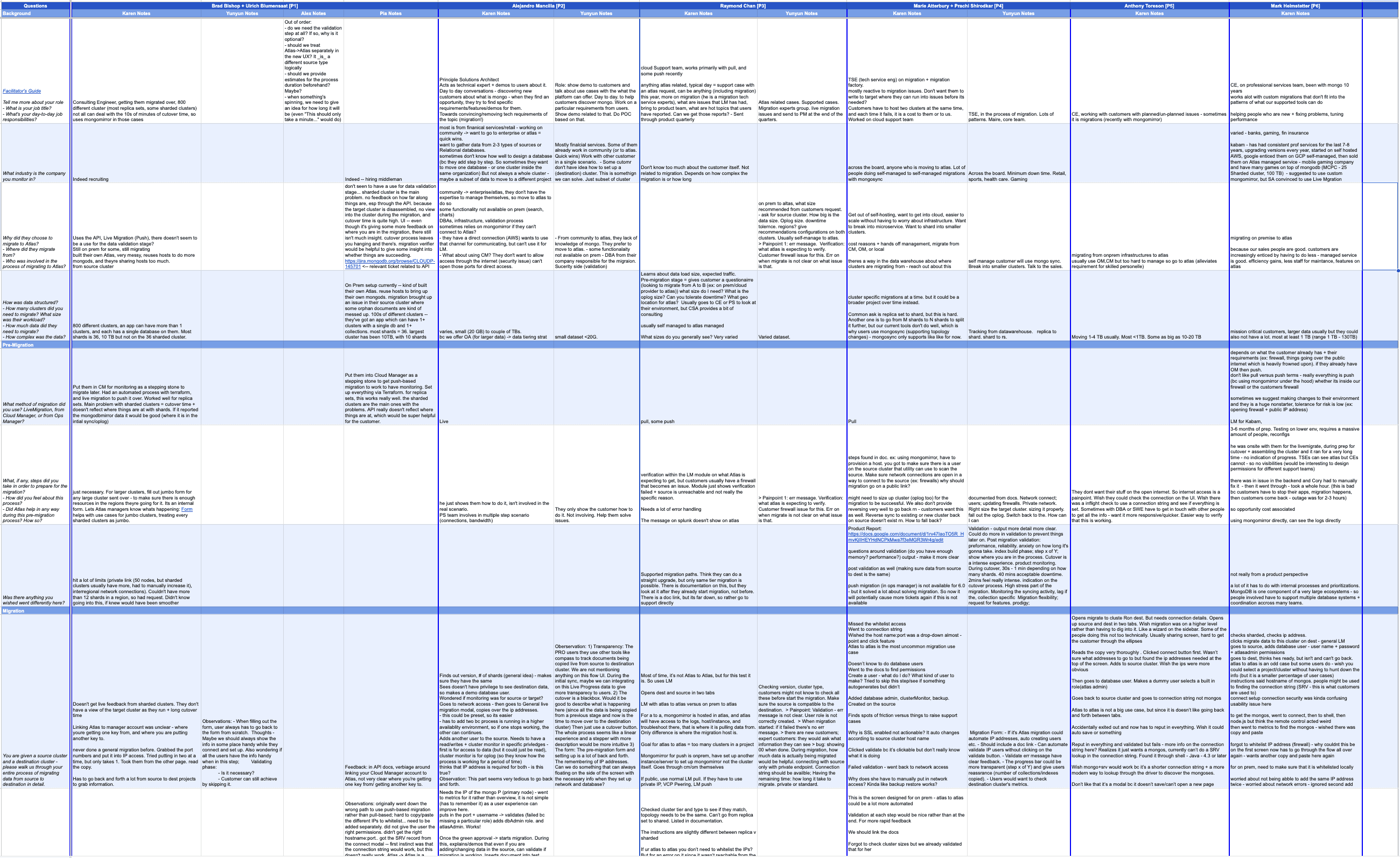
10 Enterprise migration support interviews
3 Migration service competitor analysis
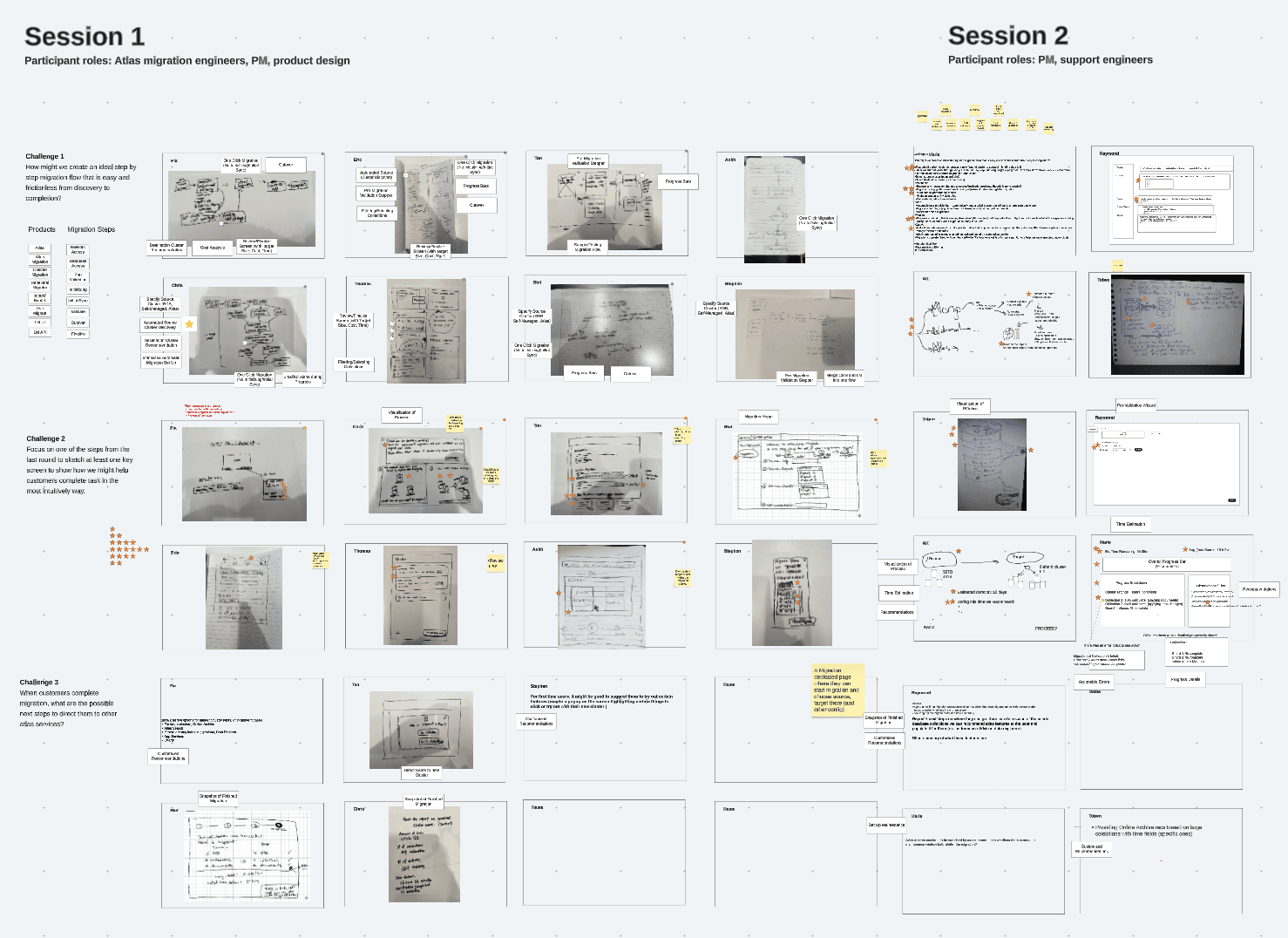
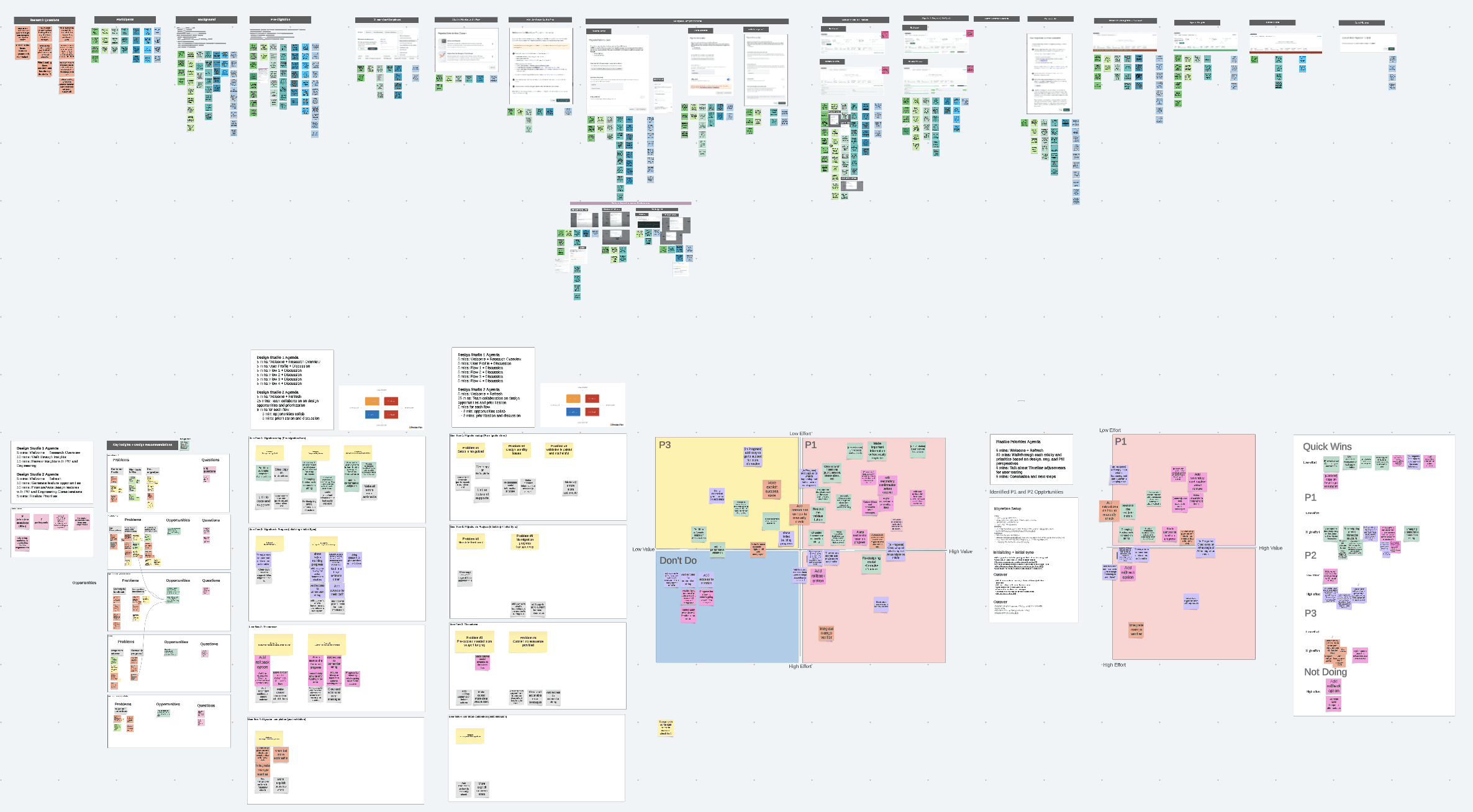
2 Design studios with 12 migration SMEs
At this point, I aligned with stakeholders and solidified our primary goals. This became the north star focus for the remainder of the project timeline.
After validating multiple iterations of work with external user testing and follow up interviews, these are the key solutions addressing the specified goals.
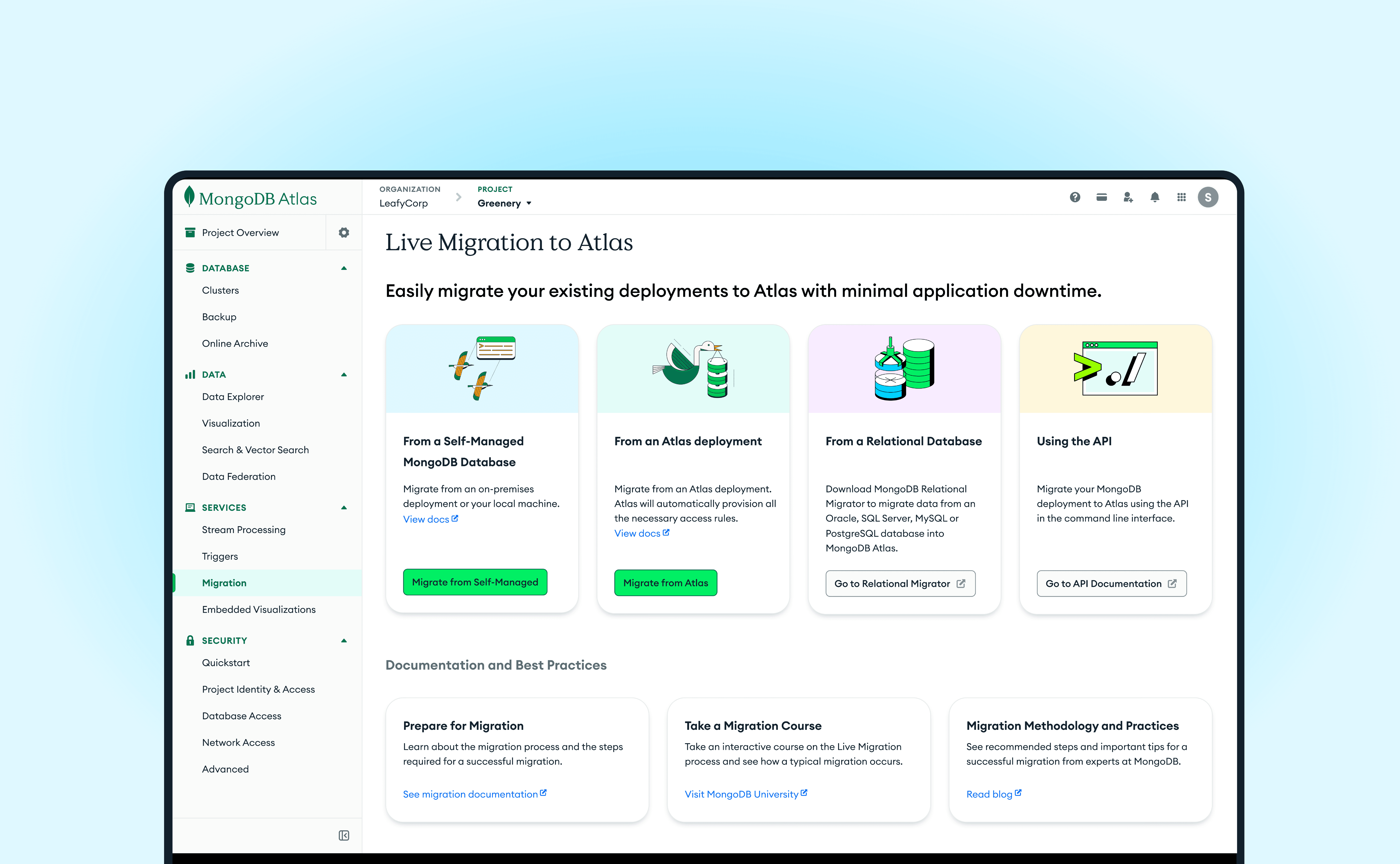
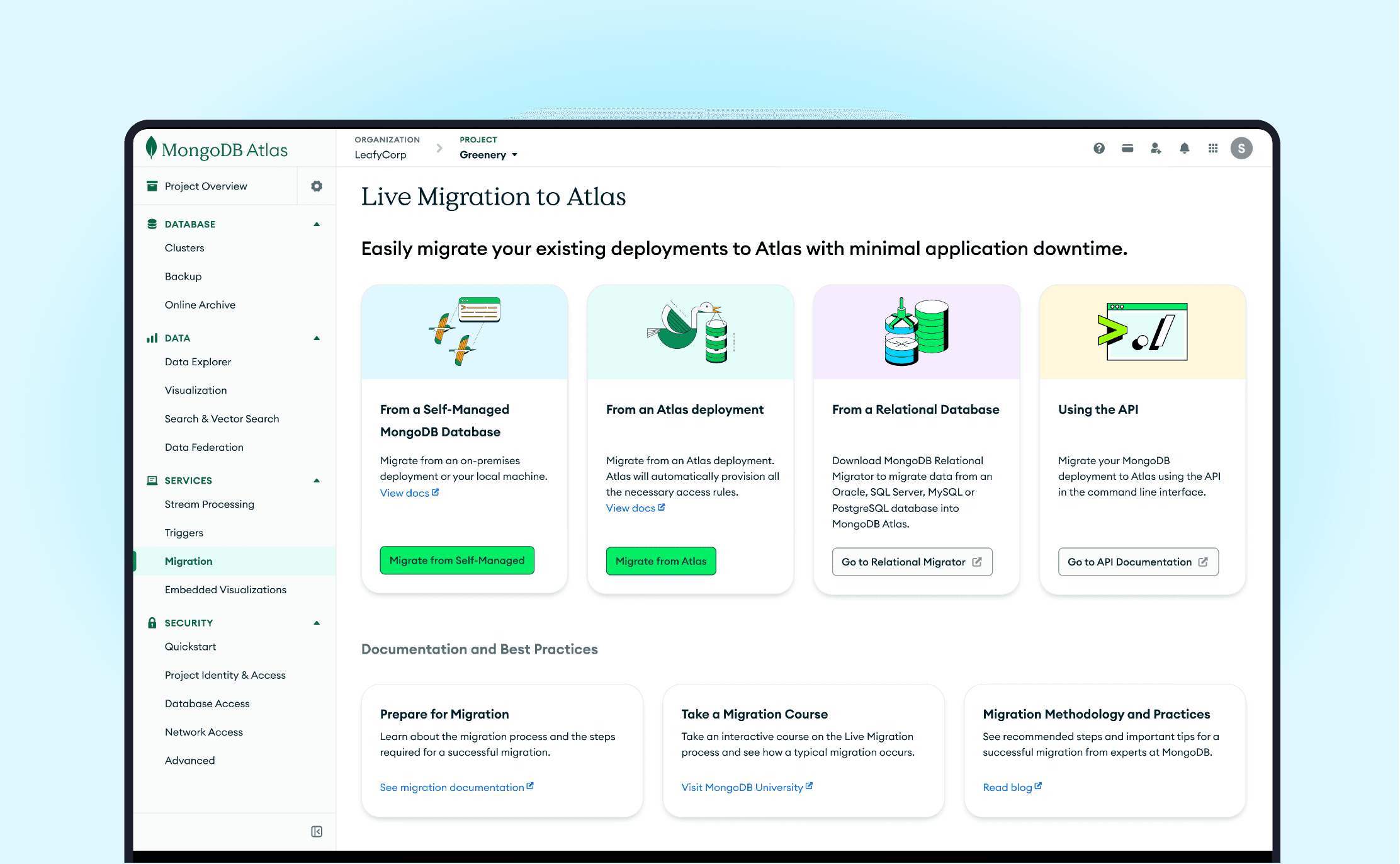
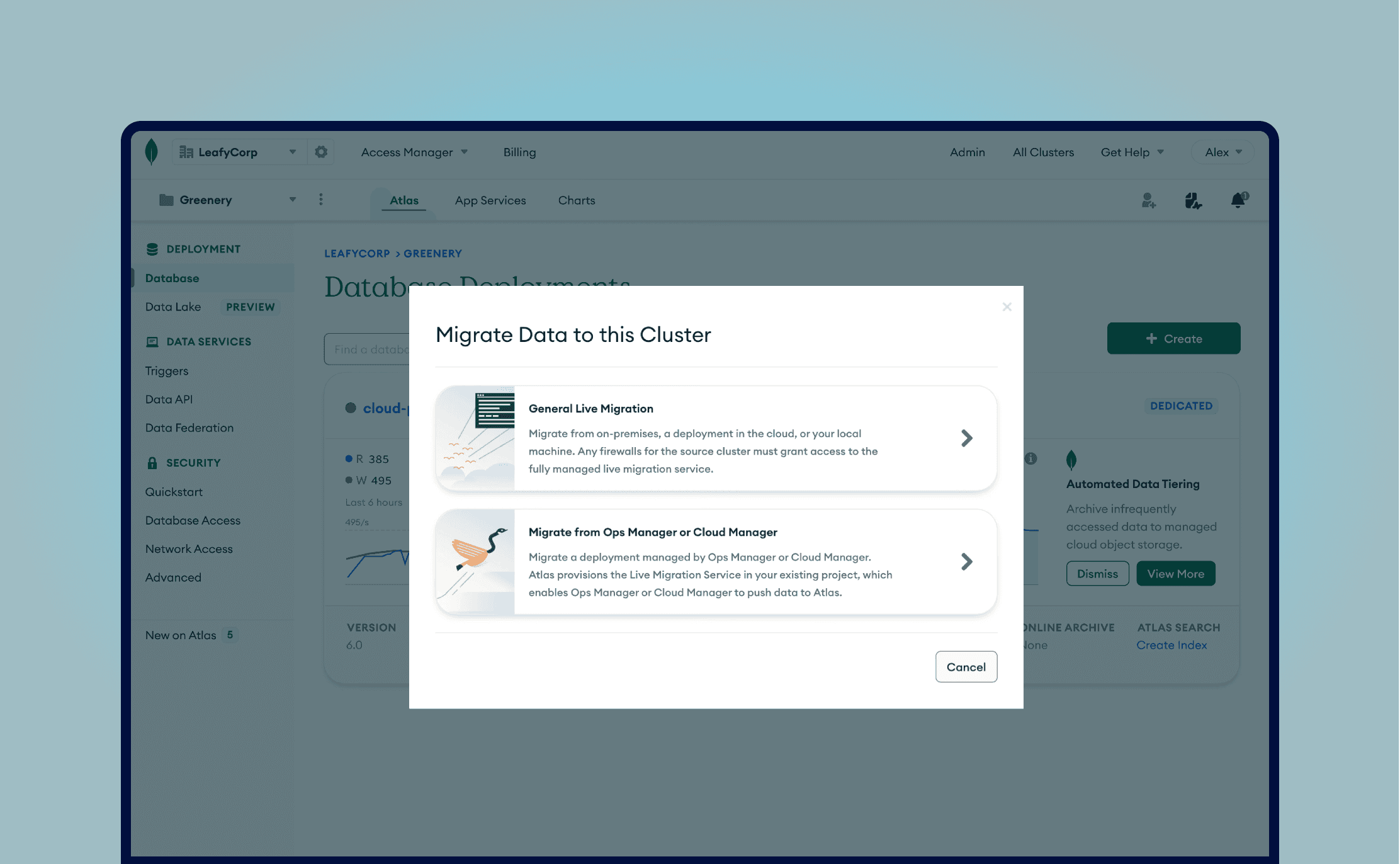
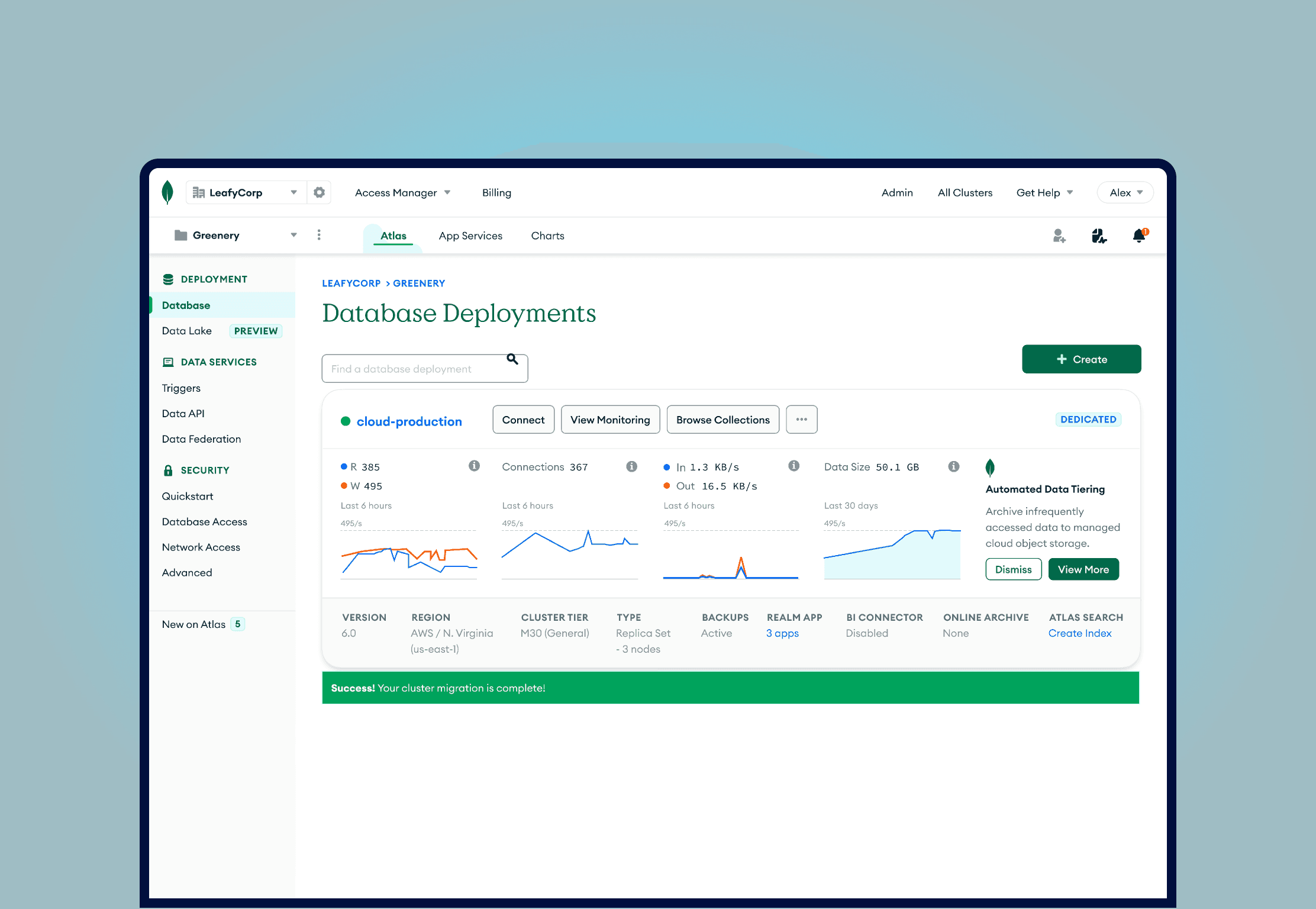
Previously, users could not find the Live Migration feature hidden under the cluster card menu. Now, users have increased awareness through a dedicated migration home in the project level side navigation. This new hub has increased dedicated support and guidance for self serve endeavors.
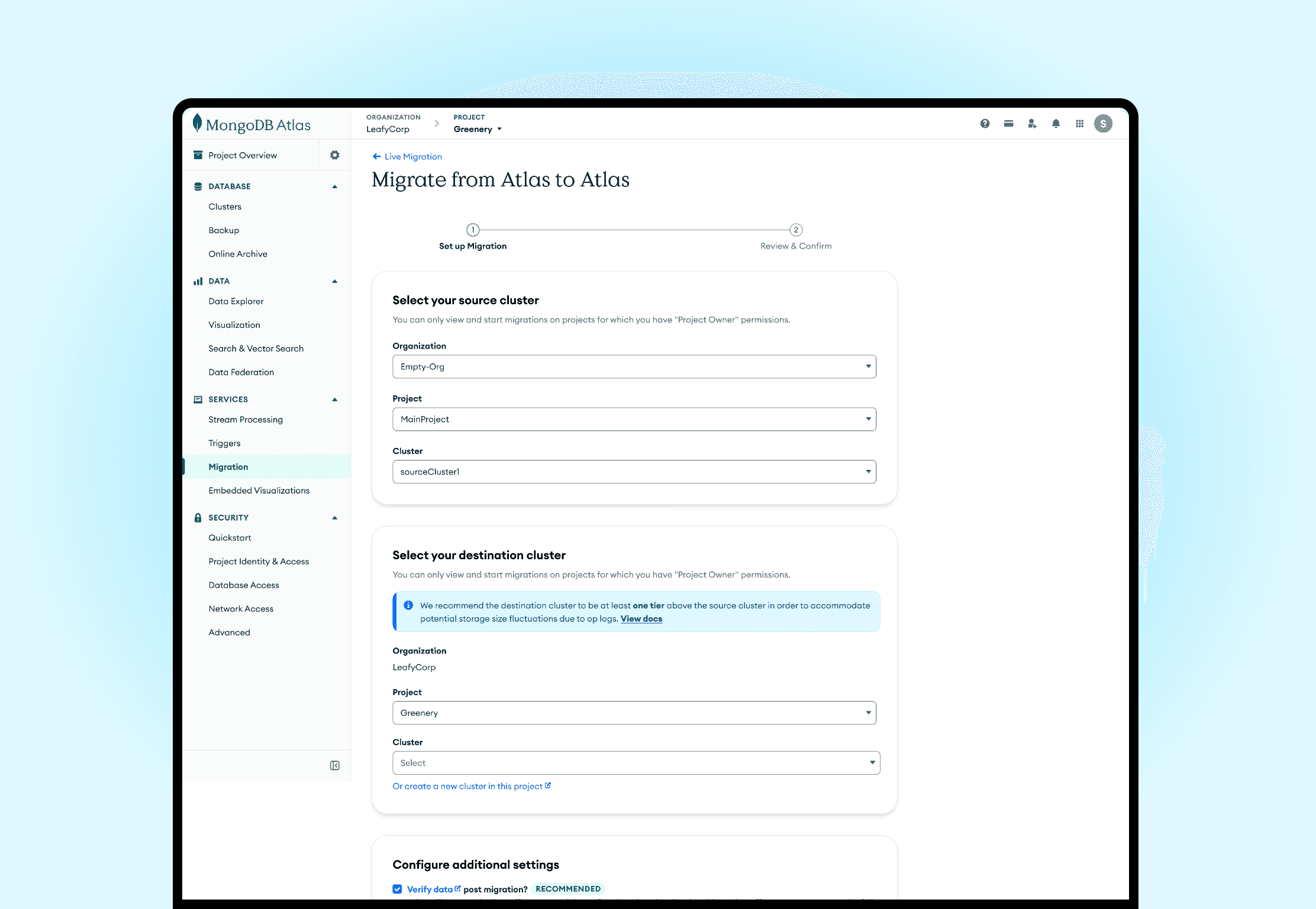
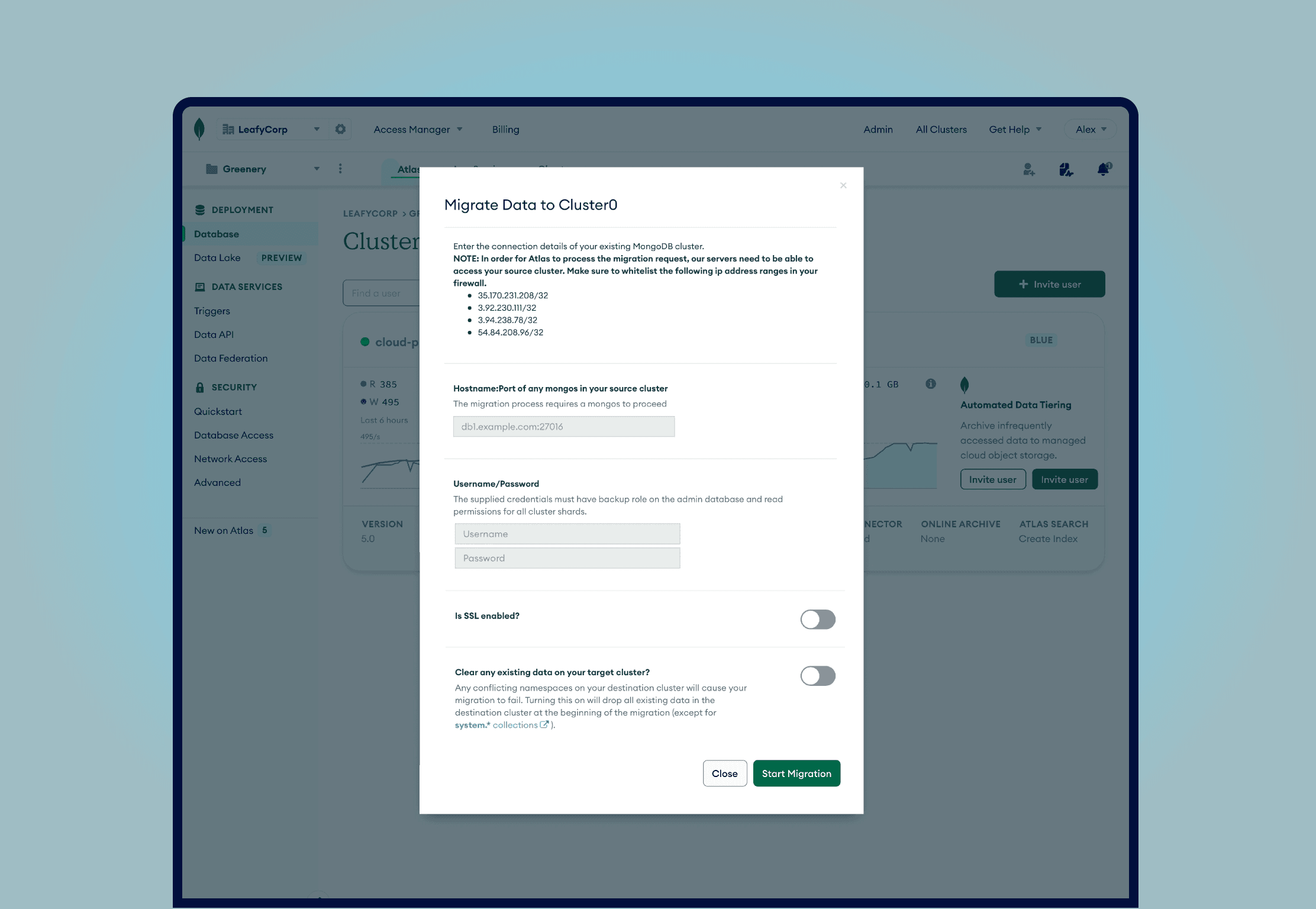
Previously, users had to constantly go hunt for source cluster information, ip addresses and user credentials. Now, set up is integrated into the migration flow - Atlas automatically identifies available clusters, provides network access and creates a temporary user for the migration. During the migration, Atlas will automatically verify the data moved.
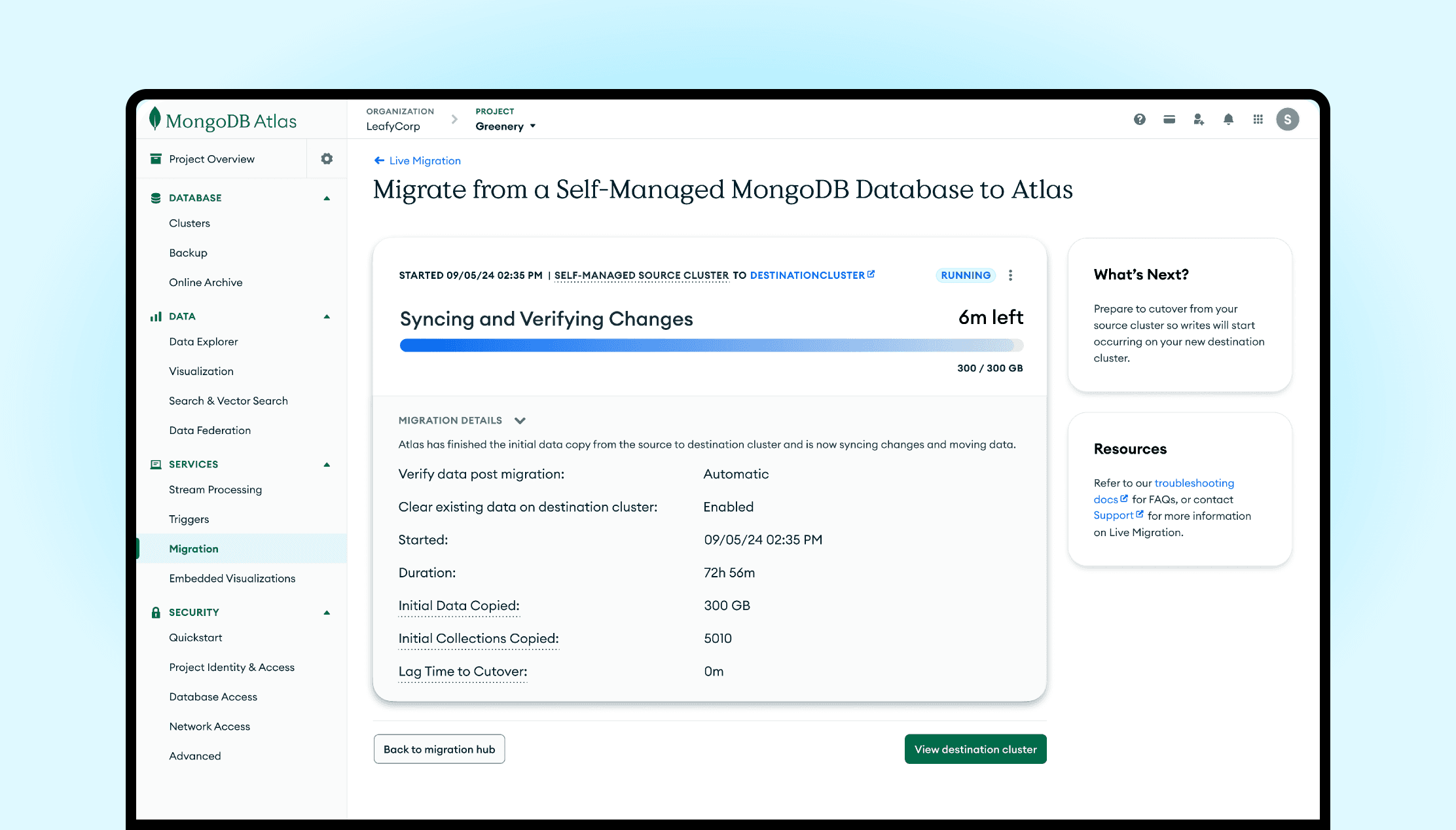
Previously, after starting the migration, users remained uncertain with inaccurate and vague progress information. Now, there is a dedicated migration progress page for every distinct migration initiated with stage explanations and metadata details so users can remain aware and confident in their journey.
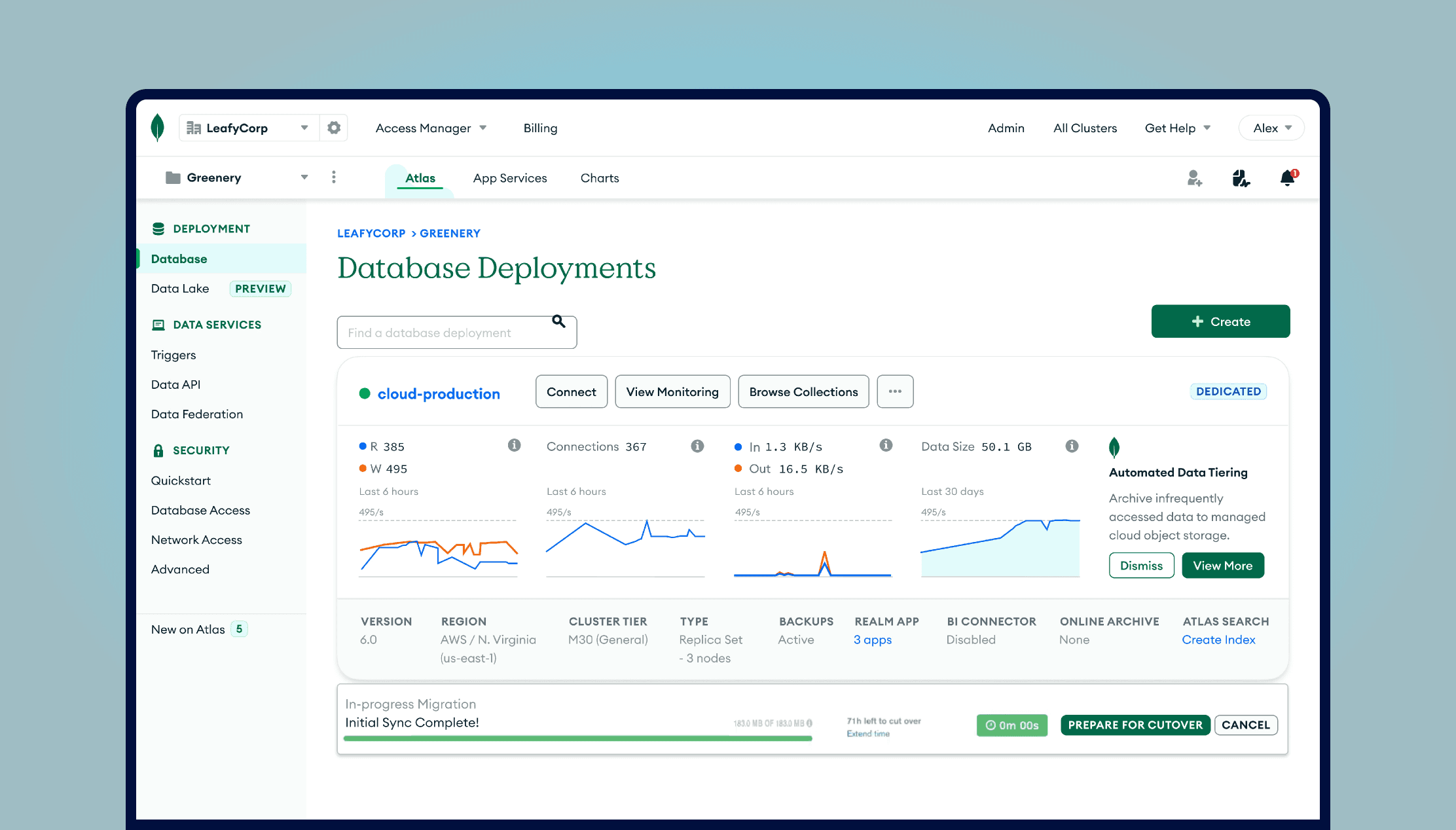
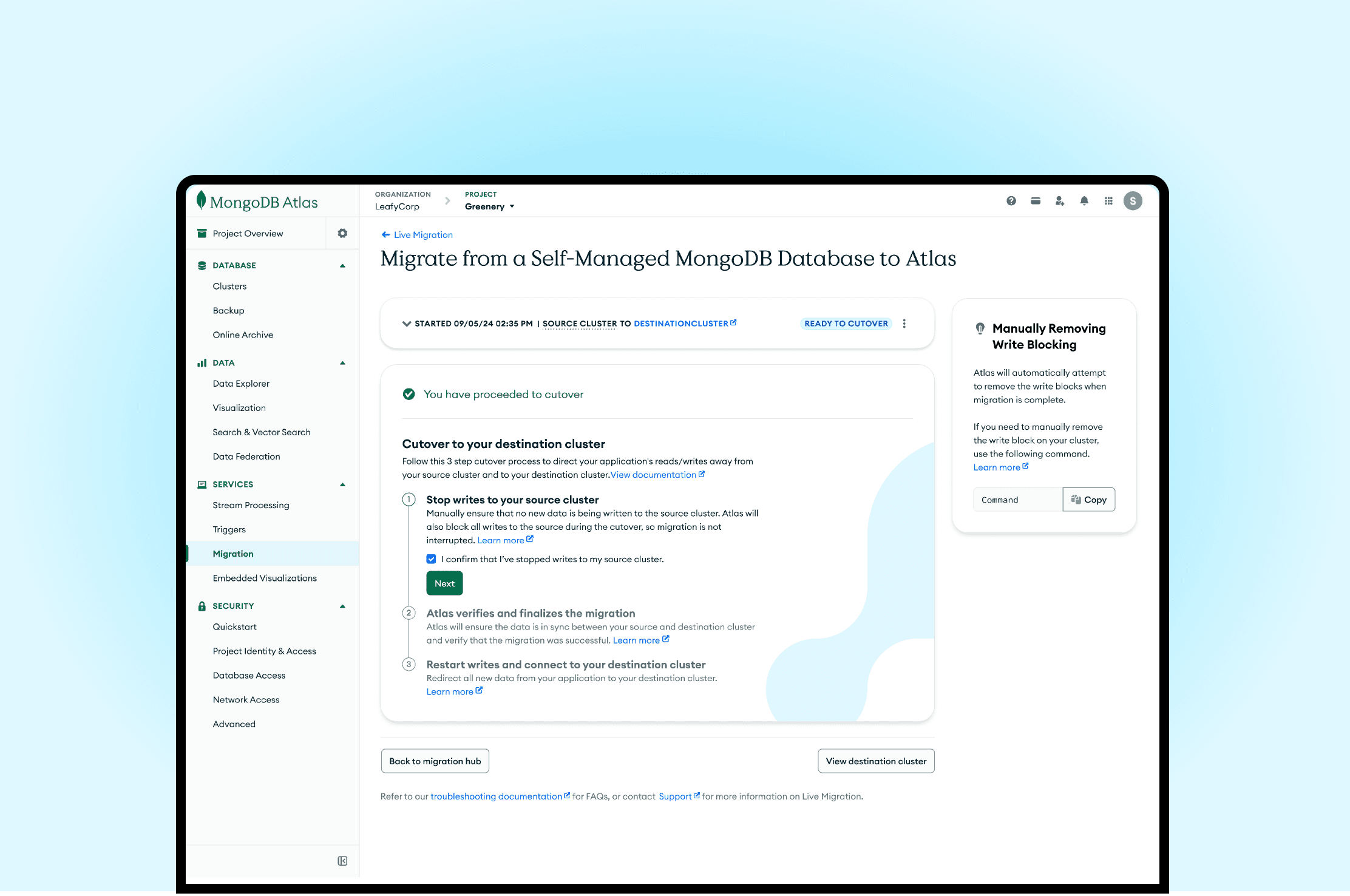
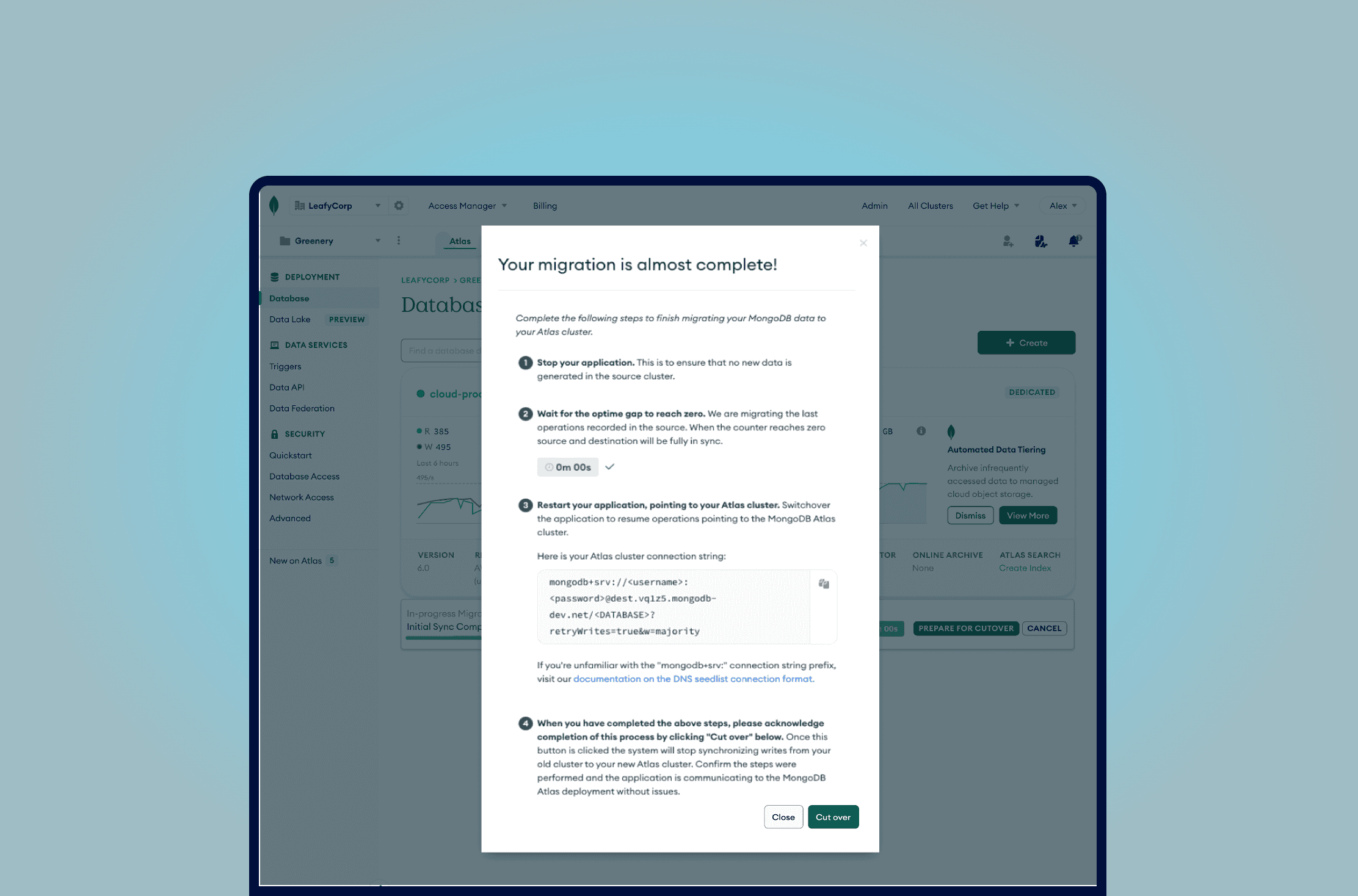
Previously, completion was a stressful, confusing and manual process for users. Now through automation, progressive disclosure and simplification of information, completion is now a two step process - users need to stop writes then we automatically verify and finalize the migration for them.
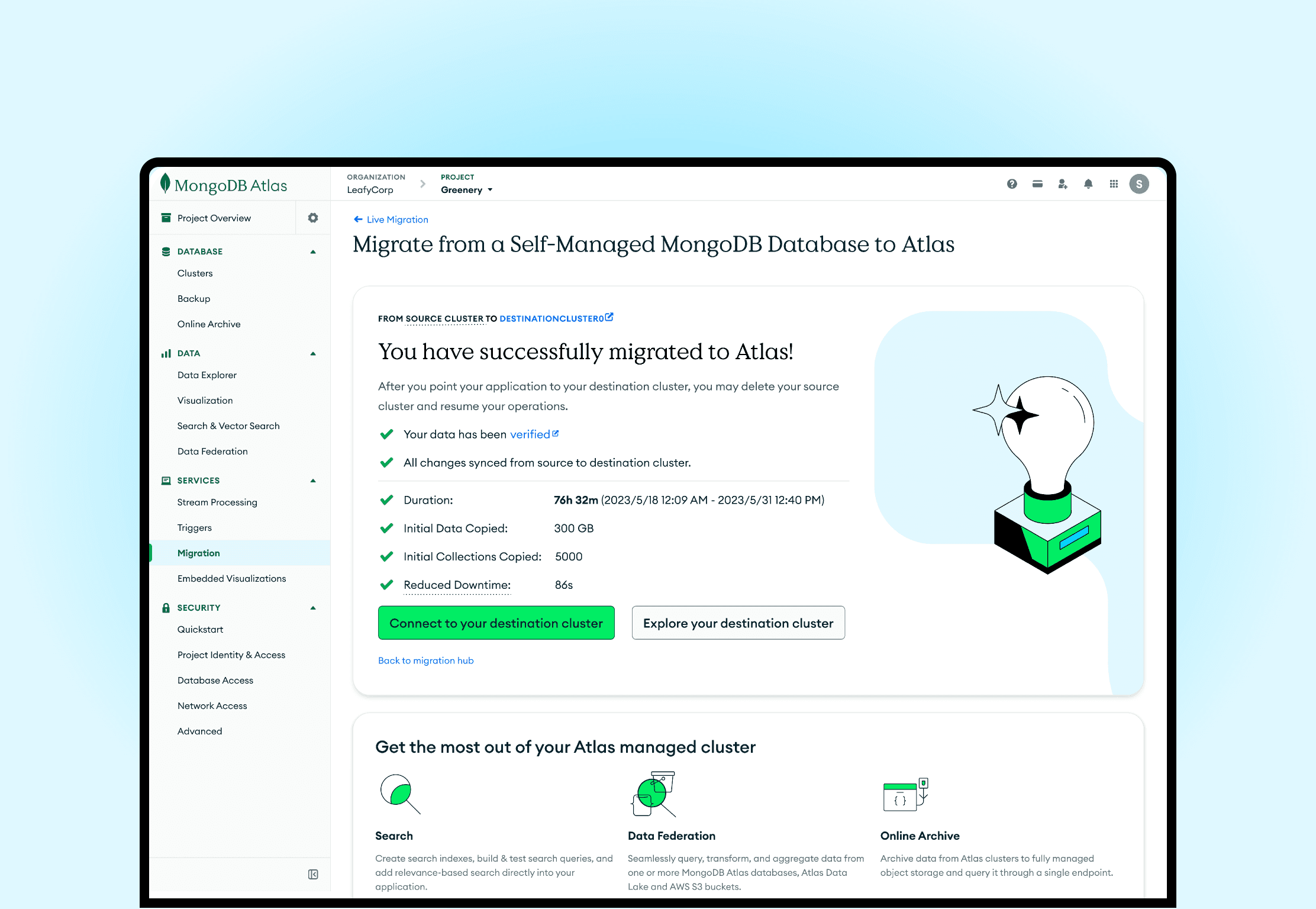
We now end their journey with a bit of joy through a final success report and easy redirection to their new cloud-managed cluster!
The design was gradually implemented in prioritized phases. In mid 2025, majority of the live migration UI had gone live along with multiple engineering correctness efforts. By late 2025, segment tracking made it clear that Atlas live migration has drastically improved in success rates and in bringing a cleaner and more automated experience to users.
0% ->
of all Atlas live migrations are now automatically and successfully verified during the migration process. Users no longer have to opt in or manually verify their migrations.
25.9% ->
of all Atlas live migrations are successful, excluding user caused errors. This shows an increase in experience navigability and backend assuredness, especially from the original low 25.9% success rate!
44% ->
of all migration now use Atlas live migration and are self service. Larger migrations still require the usage of standalone mongosync and migration factory help, but future endeavors to add filtered sync, resumability and customizable parameters to Atlas live migration will improve scaled usage.
CROSS TEAM COLLABORATION
I have always worked very closely with my engineering team. This project highlighted the importance of involving engineering early and frequently in the design process, utilizing async communication and keeping a living document for notes and decisions as a result.
FLEXIBILITY AND COMMUNICATION
In 2023, this was my first large blue sky project. By struggling with the unknown, I learned to be more comfortable with it - that included being flexible with planning and communicating changes early and clearly.
STAKEHOLDER MANAGEMENT
This was my biggest lesson in stakeholder management and empathetic communication. I learned to help everyone’s voices be heard in important conversations but also, to prioritize feedback from a user and business perspective for a good balance backed by reasoning.
SUBJECT MATTER EXPERTISE
As a product designer working at MongoDB, a database company, I’ve always loved the technicalities of every project I work on. The extent of the migration hub project allowed me to explore my creative problem solving skills and the flexibility of our timeline and engineering resources allowed me to user test and update iteratively.